
Over 50 years of Tourism Advocacy
Building India's Travel Businesses
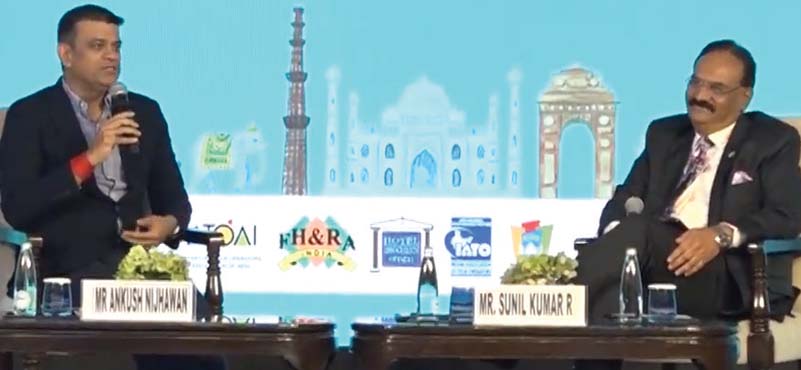
India Leads: Transforming Travel with Technology

Ankush Nijhawan is founder TBO, the global leader in online B2B travel, in conversation with Sunil Kumar, president, Travel Agents Association of India.
Sunil Kumar: Ankush, thank you for joining us. When we chose the theme, “India Leads: Transforming Travel with Technology,” you were the obvious person to invite. TBO Tech has built one of the world’s largest B2B travel platforms, connecting over a million suppliers with more than 160,000 buyers across 100-plus countries.
Indian travel is undergoing a profound transformation through digital infrastructure, mobile connectivity and now artificial intelligence. Looking ahead five years, what changes should Indian travel businesses prepare for?
Ankush Nijhawan: I often compare AI today with the arrival of the internet 25 years ago. Those who embraced the internet became industry leaders; those who ignored it disappeared. AI is an even bigger shift. It will affect every business and every individual much more deeply than the internet ever did.
In 2005 I realised that if we did not become a technology company, we would not survive. That led us to co-found TBO. Today the question is no longer whether technology matters. The question is what comes next, and for me the answer is AI.
Everyone in this room is part of the travel ecosystem. Either we evolve with AI or AI will force that evolution upon us. Standing still is simply not an option.
For technology companies, the responsibility now is to extend sophisticated tools to small and medium enterprises, not just large corporations. Technology companies also cannot operate in silos. They must work closely with travel companies because technology alone is not enough. Distribution, relationships and supply remain fundamental strengths.
 For travel businesses, I see tremendous willingness to learn. Associations now have an important responsibility to improve AI literacy. Discovery will increasingly happen online and through AI, but fulfilment, service and after-sales support will continue to belong to travel professionals.
Complex itineraries will still require expert advice. A customer may discover possibilities through AI, but when planning a large family holiday or an expensive multi-country itinerary, they will still rely on trusted travel advisors.
That means SMEs should work more closely with technology companies. We should build the tools while travel professionals continue to own the customer relationship.
Hotels and airlines also have significant work ahead. Airlines have moved faster, but hotels must use AI for smarter distribution, better pricing, improved guest experiences and seamless connectivity with distribution platforms while maintaining privacy and security.
Government too has a role. It should encourage AI adoption among SMEs through incentives, training and awareness programmes.
Inside TBO every employee completes structured AI training. Learning how to use tools such as GPT is becoming a basic business skill.
There is another reality we cannot ignore. Many non-revenue functions will become automated. Finance, back-office processing and call centres will become leaner. AI will create efficiencies, but it will also change the employment landscape.
Sunil Kumar: Technology has already transformed travel. TripAdvisor received its first review in 2001. Today hundreds of thousands of reviews are posted every day. We saw early concepts like Couchsurfing evolve into entirely new business models. The pace of change has been extraordinary.
Ankush Nijhawan: Absolutely. When I began my career, printing a few tickets in a day was considered productive. Today our systems generate hotel vouchers or tickets every few seconds.
The next phase is collaboration. Technology companies must help associations and travel businesses understand how AI can improve selling, customer engagement and productivity.
 We should conduct demonstrations, webinars and practical workshops rather than simply talking about AI.
Let me share a simple example. Our AI analysed overseas hotel bookings by Indian travellers and identified one of the most searched requirements—a jet spray in the bathroom. That insight emerged from data, not assumptions. AI uncovers patterns that help travel businesses serve customers better.
The objective is to make travel companies more efficient, save time, improve conversions and deliver better customer experiences. Technology providers should solve these problems while travel advisors continue to own their customer relationships.
Interestingly, online travel agencies may actually face greater disruption because customers who once visited a website can now simply ask an AI assistant. Human advisors who specialise in complex travel continue to have a strong advantage.
Sunil Kumar: You operate across more than 100 countries. How does India compare globally in adopting travel technology?
Ankush Nijhawan: India is among the fastest adopters of technology. Our Indian partners constantly challenge us with better ideas and practical feedback.
Even in the United States, where internet adoption is extremely high, much of premium leisure travel still happens over the phone and email. Large-value holidays continue to depend on human relationships.
The market is vast enough for both online and offline channels to coexist. AI will certainly change that balance, but businesses that adapt early will benefit the most.
Our partners across India continue to inspire product innovation. Every city visit generates new ideas that improve our platforms.
Sunil Kumar: Finally, what message would you like to give to the associations under FAITH? How should they help members prepare?
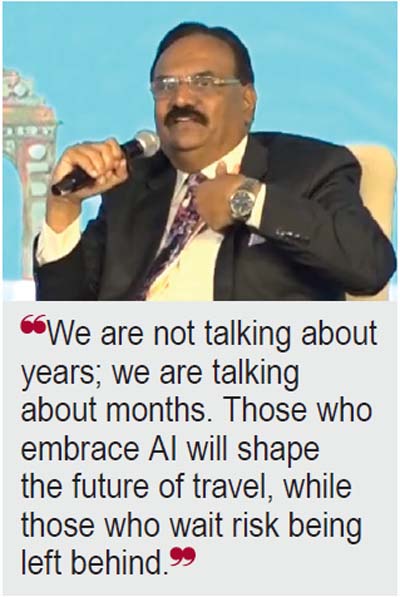
Ankush Nijhawan: The luxury of waiting no longer exists. We are not talking about years; we are talking about months.
Associations must aggressively educate travel companies and their teams. Technology providers like us would be happy to work alongside FAITH as partners in that effort.
The objective is not merely to introduce AI but to teach businesses how to use it to remain competitive. The pace of change is unprecedented, and those who begin learning now will be in a much stronger position than those who wait.
The travel industry has always adapted to change. AI is simply the next—and perhaps the biggest—transformation. Those who embrace it will shape the future of travel.