
Over 50 years of Tourism Advocacy
Building India's Travel Businesses
Incredible India, Invaluable Economies

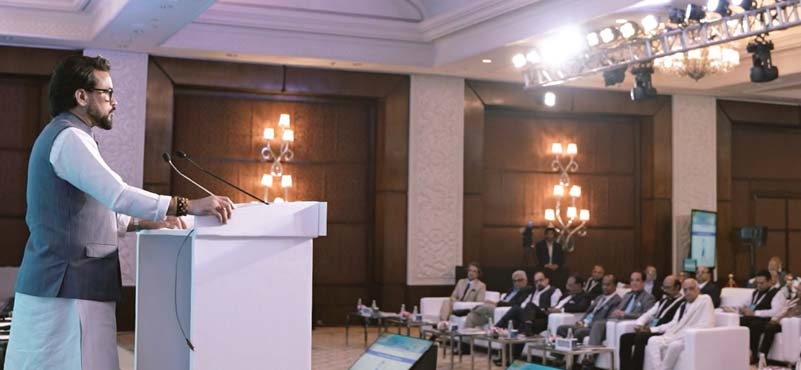
Keynote address by Anurag Singh Thakur, Member of Parliament, Lok Sabha at Second FAITH Conclave
Board members and presidents of all 11 member associations of FAITH, my friends from the tourism, hospitality and aviation industries, ladies and gentlemen, friends from the media: namaste and a very good evening to all of you.
My sincere apologies that I could not join you at 12.15. I had a Joint Parliamentary Committee meeting in Parliament. I was also supposed to be in Himachal today because Amb Andaura railway station, which falls in my constituency, was being inaugurated by Prime Minister Modi.
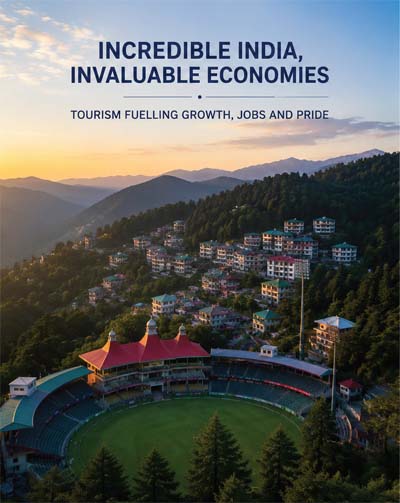 It is my privilege to be here for the second FAITH Conclave, so aptly themed, “Incredible India, Invaluable Economies.” As an organisation, you do not merely carry a catchy acronym. Through your dedication and hard work, you have shown that you deserve it – not just in letter, but in spirit.
I compliment you for setting an ambitious target of a $3 trillion tourism GDP by 2047. It is a target that aims to create upwards of 100 million tourism jobs and enhance the share of tourism to nearly 10 per cent of our $20 trillion economy by 2047, towards which we are rapidly moving under the direction of Prime Minister Narendra Modi.
Your Vision 2047 talks of a $3 trillion tourism economy, driven by 100 million foreign arrivals and 20 billion domestic visits. If you ask for my comment, I would simply say: great minds think alike. FAITH’s Vision 2047 resonates completely with the vision and mission of the Government of India.
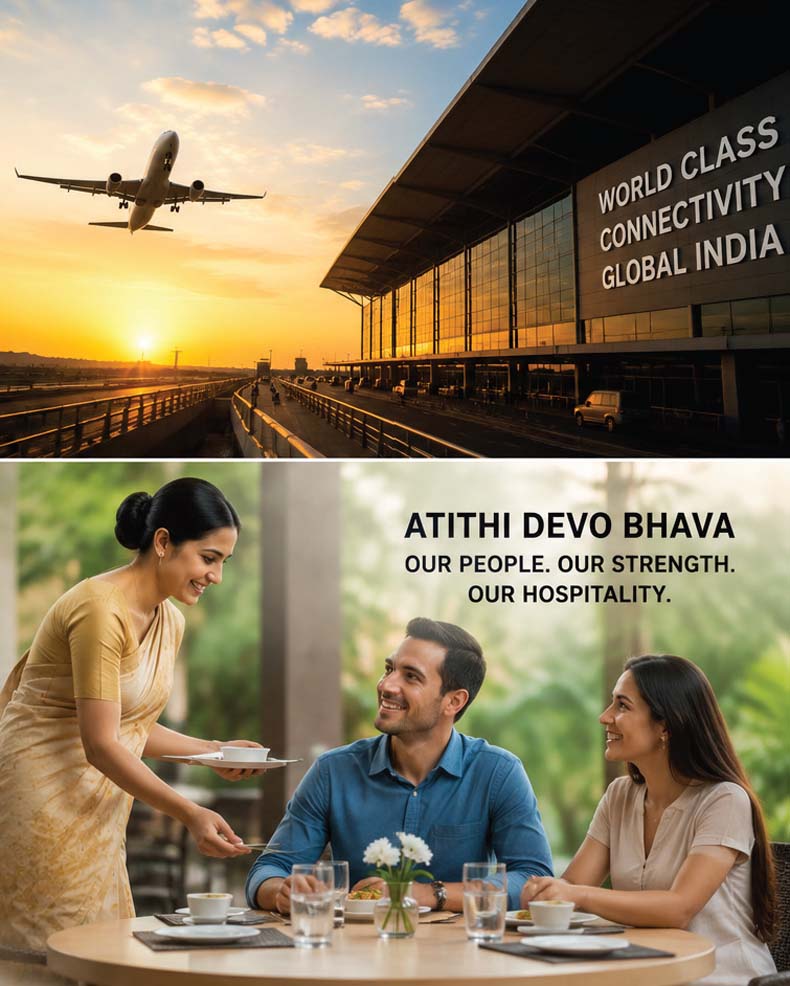
When a foreigner lands in India for the first time, they carry two words in their mind: Incredible India. India is growing rapidly, supported by world-class hospitality, globally acclaimed airports, highways, railways and emerging cruise services. This is delivered by our people in the spirit of Atithi Devo Bhava, and by our incredible hospitality entrepreneurs.
India is a story not just of monuments and mountains, but of emerging markets and progressive minds – a story of how a 5,000-year-old civilisation is building a 21st-century economy while nourishing its soul and spirit.
Last year, I had the opportunity to meet a group of European travel bloggers – seasoned travellers who told me that they had travelled to almost every nook and corner of the world and covered almost every major tourist destination across the globe. They said they had been visiting India for the last seven years and had seen almost every part of India, with nothing left behind.
I simply checked with them: have you seen Reckong Peo, Kalpa and Chitkul, all in just one district of Himachal Pradesh – Kinnaur? They looked at each other in complete astonishment. None of them had even heard about these places. I told them: it has only been seven years. Even after seven births, you will not be able to see the whole of India.
There is a lot to showcase. Our tourism does not copy any model; we have our own unique model. We have the power of 1.4 billion Indians rapidly growing our tourism demand.
Let me talk about Dharamshala. I was sitting with Vijay Lal ji. He is from Pragpur in Kangra district, where they have a beautiful boutique heritage hotel. When we think about Dharamshala, the first thing that comes to mind is His Holiness the Dalai Lama. Since the 1950s and 1960s, people have gone to McLeodganj, seen a few cafes and not much more. When we speak of Incredible India and invaluable economies, let me take you to the hills of Kangra.
If you want to see this theme not on paper, but in its purest form – on the ground, in a small dhaba or in the diary of a taxi driver – you must go there.
Twenty years ago, when I was president of the Himachal Pradesh Cricket Association, I pursued the idea of building an international cricket stadium at Dharamshala. Everyone looked at me and laughed. I was just 26 years old. They would look at that 300-foot hill and say, “Are you going to build a stadium on a cliff?” Today, it is rated as the world’s most picturesque stadium.
That stadium became the anchor around which the economy was built. In 2005, when we hosted the first match, we did not have even a single flight to Dharamshala. We did not have even a single three-star hotel. Today, we have at least four five-star hotels and many three- and four-star hotels.
Even on a non-match day, you have to pay a Rs 30 ticket to enter the stadium and get a picture clicked. Paisa kamana karan nahi tha – earning money was not the reason. We wanted the data to know whether people were really interested in coming. We get at least seven lakh visitors every year who come just to see the stadium. Aur pehla five-star banane wale, Radisson wale, yahan par baithe hi hain.
Why do I talk about a remote hill town? It had difficult terrain, no airport and nothing else. But today, on a match day, within a radius of 20, 30 or 40 kilometres, most of the dhabas, shops and other establishments remain open until midnight and their stocks run out.
I will give you the example of the Barmy Army. We had a match between India and England, and more than 4,000 or 5,000 people flew from England to support their team – just to come to Dharamshala and go back. The beer in Dharamshala went out of stock at all the thekas, and the Test match got over in two and a half days! We had a lot of stock. I told them to come and play the match; you will get beer here too.
The reason was not just to get them beer or bring them to the stadium. They came for cricket and for that beautiful Dharamshala stadium, but they also saw the monasteries and the culture of Dharamshala. They went for a trek and did many other things around it.
The idea is that you can build something at a height of 5,000 feet, but what you build around it is also very important. No Himachal government could have afforded to publicise Himachal across the world on television or social media in the way it gets publicity for free because of a cricket stadium. Even if you spend crores and crores of rupees, you cannot get the kind of publicity that comes when a commentator subtly speaks about and showcases the beautiful Dhauladhar ranges.
My point is that the government can build infrastructure; we have to build around it.
I still remember that, when we were supposed to hold the IPL games this year, we had a meeting and I said, “Let us showcase Dev Bhoomi, Veer Bhoomi and Khel Bhoomi – Himachal Pradesh.” The beautiful drone show, laser show and fireworks got millions and millions of views on social media platforms. Jo match dekhne aaya tha, woh reel banane lag gaya. After watching the drone show, it went viral across the world.
It was not just cricket; entertainment was also going on alongside it. When we talk about music concerts and other such events, we have always looked at metro cities because we can easily draw a crowd. Look at Meghalaya: it is becoming a destination today. It all depends on what we present with one anchor. Dharamshala Cricket Stadium was that anchor.
We showcased our culture, cuisine, way of life and mountains so that people do not return only as cricket fans. They should come with their families to spend time in the beautiful mountains.
Friends, we are home to one of the world’s oldest civilisations; thousands of years of living heritage; beautiful landscapes; diverse ecosystems; vibrant festivals; spiritual traditions; rich cuisine; and countless stories waiting to be experienced. Bharat is home to as many as 43 UNESCO World Heritage Sites – architectural marvels in the form of monuments, forts and temples, and natural marvels where science itself surrenders. Every corner of our country has a unique identity, a fascinating history and an experience that leaves a lasting impression.
Friends, for many years, another objectionable trend – slum tourism – became part of India’s global image. Today, that has changed. The world now comes to India for its civilisation, culture, spirituality, heritage, wildlife, wellness, adventure and world-class infrastructure.
If you examine the Panch Pran, the five resolves outlined by Prime Minister Modi, the second is to remove the colonial mindset and the third is to take pride in our roots. India’s tourism policy is exactly an amalgam of both. India is perhaps the only land in the world that has captivated countless travellers so deeply that many choose not merely to visit, but to settle here and make it their second home.
Go to Vrindavan, Varanasi, Prayagraj, Ujjain and the Himalayas. You will meet people from across the world who came in search of peace, knowledge, spirituality and fulfilment, but stayed back.
If someone asks me which two simple ideas best define India’s age-old tradition of tourism and hospitality, my answer is this: our heritage tourism and monuments reflect our deepest past across every state and Union Territory, while our spiritual economy remains a guiding light.
Nearly 660 million people visited the Kumbh. A temporary city bigger than many countries was built in just 45 days. Our soft power of yoga is today a $100 billion global industry. Indian weddings are now creating destinations of their own.
The Prime Minister made one call: “Wed in India.” I know at least ten people whose family weddings were lined up abroad, from Thailand to Europe. They cancelled those plans and held their weddings in India.
In the Union Budget for the financial year 2026-27, the government advanced this further by proposing a National Institute of Hospitality and a plan to upskill at least 10,000 tourist guides at iconic destinations.
India today ranks eighth among the world’s top tourism economies, contributing $231.6 billion to the national economy. Tourism is therefore not just about sightseeing and clicking good pictures; it is a journey into a nation’s culture, civilisation and history.
We are rediscovering, reimagining and rebranding our heritage under the PRASHAD and Swadesh Darshan schemes. The government has approved 183 projects in the last 12 years and has also decided to develop 15 key archaeological sites.
Connectivity is very important. Because I come from Himachal Pradesh, I do not know whether you face the same issue or not. Under the UDAN programme – Ude Desh ka Aam Nagrik – small towns are also being connected. The number of airports has gone up from 74 to 164.
But I still feel that the domestic cost of travel in India is on the higher side, especially air travel to Dharamshala, where only small aircraft operate. Kullu and Shimla still do not have frequent flights. Our highways and Vande Bharat trains are providing some help to an extent.
Last-mile connectivity is very, very important to any tourist destination. However remote or mountainous a place may be, that should never be the reason for a traveller to stay away. I need your feedback on what else can be done as far as infrastructure is concerned.
In the end, I would like to say this to the industry leaders in this room: the government can build infrastructure, but it is FAITH and its member associations that turn that infrastructure into experience. Infrastructure creates opportunity, and hospitality converts that into livelihood.
Today, we have everything: the dream, the desire, the determination and a clear direction to unlock our immense tourism potential. We have a government committed to providing 360-degree support to the tourism sector and developing at least one world-class tourist destination in each state.
Let us build an India of tourism that is incredible to experience and impossible to copy. The world needs an Indian way. I am happy to note that FAITH is working to make that happen.
I wish you all the very best, and I am sure you are going to achieve your target of a $3 trillion tourism economy by 2047 and make India a Viksit Bharat.
Thank you. Jai Hind.