
Over 50 years of Tourism Advocacy
Building India's Travel Businesses
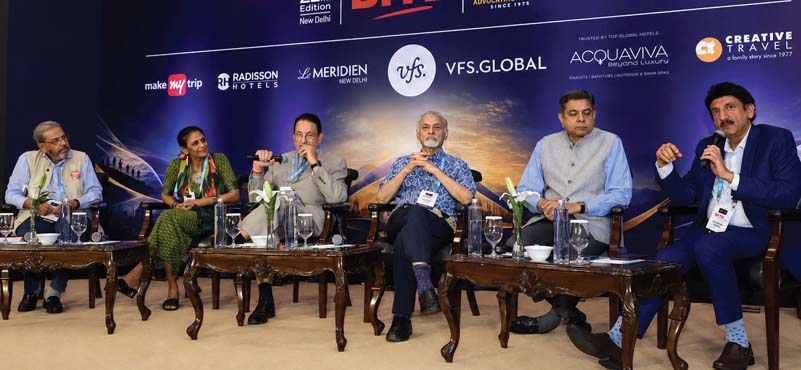
Heritage as a Living Economic Asset, for Sustainable & Inclusive Tourism

India’s heritage must evolve from preserved monuments into living assets that empower communities, enrich experiences, inspire innovation, and drive sustainable tourism-led economic development.
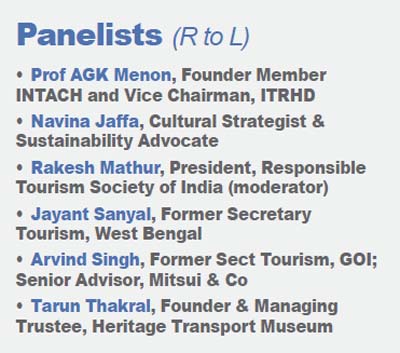 RECOMMENDATIONS
1. Heritage Must Become an Instrument of Development
Perhaps the most fundamental conclusion emerging from the discussion was the need to redefine the way India views its heritage. For far too long, heritage has been treated primarily as an object of preservation, something to be protected from change rather than harnessed for national development. While conservation remains indispensable, the panel argued that preservation alone cannot become the end objective. Heritage must increasingly be viewed as a living economic asset capable of generating employment, supporting local enterprise, strengthening tourism, enriching education and financing its own long-term conservation. Rather than seeing development and preservation as opposing forces, India must recognise that responsible development can itself become the strongest guarantee of preservation. The challenge, therefore, is to move from protecting monuments to activating heritage as an engine of sustainable economic and social transformation.
 2. Communities Must Become the Principal Beneficiaries
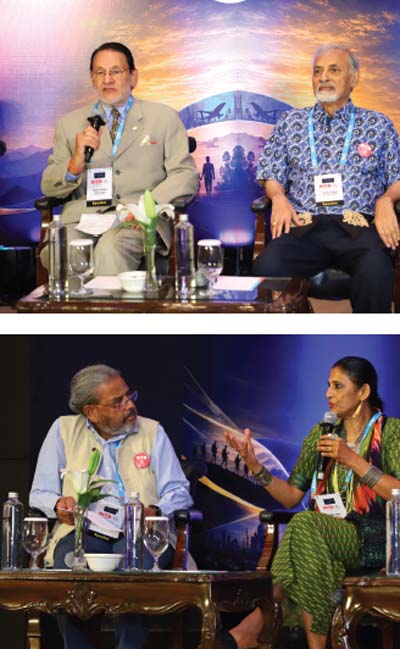
A recurring theme throughout the discussion was that heritage cannot flourish unless local communities become active participants and beneficiaries. Too often, residents living around heritage sites remain passive observers while tourism benefits accrue elsewhere. The panel argued that local people should instead become guides, storytellers, artisans, entrepreneurs, performers, restaurateurs and custodians of their own cultural assets. Success should not simply be measured by visitor arrivals or ticket revenues, but by livelihoods created, local businesses supported and community pride strengthened. The Heritage Transport Museum offered a compelling example of how local employment and community ownership can transform a heritage project into a source of regional development while simultaneously ensuring its long-term sustainability.
3. India Must Invest in Storytelling as Much as Conservation
The discussion repeatedly returned to one striking reality: visitors remember stories far longer than they remember monuments. India possesses one of the world’s richest civilisational histories, yet many heritage sites continue to present little beyond architectural facts and historical dates. Every destination should therefore develop compelling narratives that explain not merely what a monument is, but why it matters. Stories should connect history with people, traditions and contemporary relevance, making heritage accessible to younger generations whose expectations have evolved dramatically. Better interpretation, imaginative presentation and continuous renewal of visitor experiences could become one of the most cost-effective investments India makes in strengthening its tourism competitiveness.
 4. Build Experiences Rather Than Simply Preserving Monuments
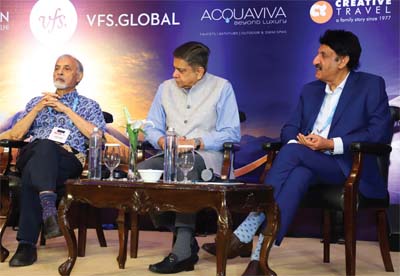
The panel strongly advocated moving beyond the traditional monument-centric approach towards creating complete cultural experiences. Heritage is not confined to buildings and archaeological remains. It also embraces music, dance, cuisine, crafts, rituals, festivals, oral traditions and countless living practices that continue to define India’s civilisational identity. Visitors increasingly seek immersion rather than observation. They wish to experience places through their people, traditions and everyday life. Integrating tangible and intangible heritage into coherent visitor experiences would not only make destinations more memorable but would also spread tourism benefits across much wider sections of society.
5. Think Small, Build Success, Then Scale Up
One of the more practical recommendations emerging from the discussion was to shift attention from India’s handful of iconic monuments towards the thousands of smaller heritage assets scattered across the country. While internationally recognised sites will always remain important, enormous untapped opportunities lie in historic villages, stepwells, forts, temples, cultural landscapes and local museums that rarely receive serious investment or promotion. Pilot projects developed around these smaller heritage ecosystems could demonstrate new models of community participation, destination management and economic viability. Successful examples could then be replicated elsewhere, allowing heritage-led development to spread organically across the country rather than remaining concentrated around a few internationally famous destinations.
6. Financing Heritage Requires New Partnerships
The panel recognised that neither government nor private enterprise can independently shoulder the responsibility of conserving India’s vast heritage wealth. Public resources will always remain limited, while private investment naturally gravitates towards commercially attractive sites. The way forward lies in collaborative partnerships involving governments, philanthropic foundations, corporate CSR initiatives, private investors and local communities. High-performing heritage destinations should also help finance the conservation of lesser-known assets through carefully designed cross-subsidisation mechanisms. Such blended financing models would improve both sustainability and efficiency while ensuring that economic returns support wider conservation objectives.
7. Heritage Includes Skills, Traditions and Knowledge
A particularly valuable contribution expanded the definition of heritage itself. India’s heritage extends well beyond monuments and historic buildings. It includes the traditional knowledge systems, craftsmanship, performing arts, cuisine, weaving traditions, oral histories and cultural practices that have evolved over centuries. Conserving buildings without preserving the skills and communities that created them risks reducing heritage to little more than physical relics. Future policies must therefore invest equally in cultural practitioners, artisans and traditional knowledge systems, ensuring that living heritage continues to evolve alongside its built environment.
8. Reform the Policy Framework to Encourage Innovation
Several speakers suggested that India’s regulatory framework continues to reflect an earlier philosophy in which preservation alone was the overriding objective. While safeguarding heritage remains essential, legislation must evolve to encourage adaptive reuse, community participation, responsible commercial activity and innovative public-private partnerships. Policy should facilitate imaginative solutions rather than unintentionally discouraging them. A modern legal framework that balances conservation with productive use would unlock far greater social and economic value from India’s extraordinary heritage resources.
9. Reimagining Heritage is Ultimately an Exercise in Reimagining India
Perhaps the most powerful conclusion emerging from the session was that India’s greatest challenge is not the absence of heritage, resources or opportunities. It is the need for imagination. Reimagining heritage as a driver of development, communities as partners in tourism, destinations as immersive experiences and public policy as an enabler of innovation together offer a compelling roadmap for the future. If pursued with conviction, heritage can become far more than an inheritance from the past. It can evolve into one of India’s strongest instruments for sustainable economic growth, cultural confidence, social inclusion and destination competitiveness in the decades ahead.