
Over 50 years of Tourism Advocacy
Building India's Travel Businesses
Indian Tourism is now Acquiring a Unity of Purpose Among all it’s Stakeholders

India’s cultural and civilizational strength is being seen by the world in a new light. As the country experiences a cultural renaissance and rediscovers its own identity, our living culture and civilizational continuity can become among India’s most influential strengths.
 Prime Minister Narendra Modi has consistently emphasised that tourism is not merely a supporting sector; it is a nation-building sector. It generates employment, creates opportunities for women and young people, and carries economic development beyond the major cities into villages and remote regions. If India is to achieve inclusive growth, tourism must be one of its strongest instruments.
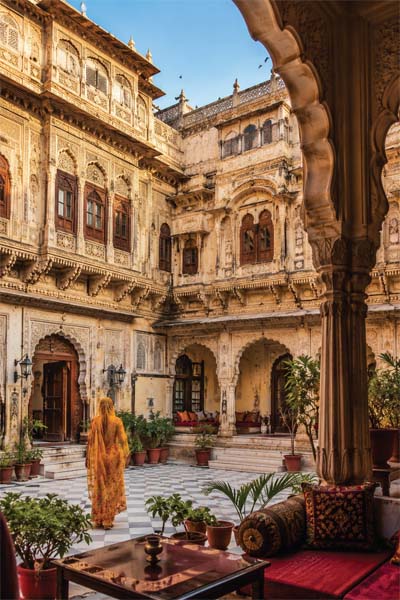
The traveller of the 21st century is no longer satisfied with merely visiting monuments. Today’s traveller seeks distinctive and authentic experiences. Visitors do not come to India only in search of its history; they come to connect with a culture that remains alive. This is India’s greatest tourism strength.
We must now increase the value generated by tourism by strengthening both our destinations and the experience economy. Increasing the number of hotel rooms is important, but we must also increase occupancy, visitor spending and the length of stay. Our concern should not be limited to footfalls. We must consider the meaningful economic and social impact created by every visitor.
India must develop destinations where heritage remains alive, development is sustainable, investment is attractive and local communities are partners in growth. Every visitor should leave with a sense of having experienced not only a destination, but also the warmth of the Indian family.
Natural beauty, history and cultural attractions alone cannot create a successful tourism destination. They must be supported by farsighted policies, strong infrastructure and effective destination management.
Over the past decade, India has invested substantially in roads, airports and railway infrastructure. However, infrastructure by itself does not automatically attract tourism investment. Investors also need stable policies, transparent rules, timely decisions and confidence in the government’s long-term commitment.
 There must be trust among the government, policymakers and industry. I believe this trust has grown significantly in recent years. Tourism can no longer be treated as the responsibility of one ministry alone. It requires a whole-of-government approach.
The work of the ministries of finance, civil aviation, railways, road transport, culture, environment and urban development has a direct bearing on tourism. Economic growth, higher incomes, improved connectivity and better public infrastructure all contribute to the growth of the tourism economy.
For the first time, India has begun working seriously on the concept of Destination Management Authorities. The Statue of Unity at Ekta Nagar provides a successful example of how an integrated destination can be planned and managed. We want to replicate this approach across the country and develop destinations that are organised, accessible, safe, digitally enabled and environmentally sustainable.
All government schemes and initiatives in tourism must contribute to this larger objective. The aim is not simply to create physical infrastructure, but to build complete and competitive destinations.
The seven pillars for attracting investment outlined earlier—policy stability, transparency, ease of doing business, timely decision-making, long-term government commitment, sustainability and cooperation—are clearly reflected in the direction of India’s policies.
 We are simplifying investment procedures, improving transparency and working to create greater ease of doing business. At the same time, India’s federal structure requires the central and state governments to work in harmony. Policies must be aligned, and every participant in the tourism ecosystem must work towards a common objective.
The results of such cooperation are already visible. Uttar Pradesh, for example, has recorded growth above the national average through focused policy initiatives and coordinated government action. Bastar, once known primarily for conflict and gunfire, is building a new identity through events such as the Grameen Olympics and is moving towards becoming an important tourism destination.
These examples demonstrate how tourism can transform the image and economy of a region.
The government alone cannot build India’s tourism sector. Across the world, tourism has grown most successfully where governments, industry, local communities and civil society have worked together. India’s tourism future will therefore depend not only upon government support, but also upon our collective responsibility.
Public-private partnership must form the foundation of the next phase of tourism development. The government must provide a stable policy environment, essential infrastructure and effective facilitation. Industry must bring investment, innovation, professional management and international standards. Local communities must participate directly and receive a fair share of the benefits.
India must also use technology to improve the visitor experience. Artificial intelligence, data analytics, digital discovery platforms and better information systems can help us understand travellers, manage destinations and promote tourism more effectively.
The next step must be towards personalised tourism—using technology and data to connect each traveller with experiences suited to their interests, while ensuring that these experiences remain authentic, responsible and rooted in local culture.
India possesses an extraordinary combination of living heritage, cultural diversity, natural beauty and human warmth. With coordinated policies, sustainable development, modern technology, greater investment and genuine partnership with local communities, tourism can become one of the most powerful drivers of India’s economic and social transformation.