
Over 50 years of Tourism Advocacy
Building India's Travel Businesses
Tourism and Aviation: Growing as One Story

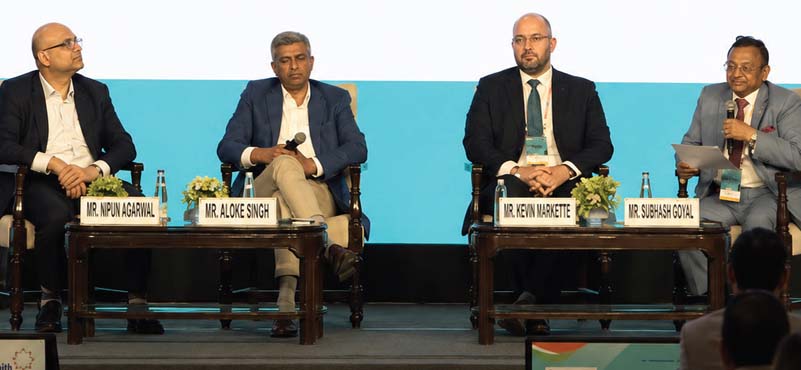
Subhash Goyal Chairman, Stic Travels (Moderator); Kevin Markett, Senior Director Regional Sales – Asia, Lufthansa Group; Aloke Singh Chief Strategy Officer, IndiGo and Nipun Agarwal, Chief Commercial Officer, Air India examine the crucial relationship between aviation and tourism, discussing India’s unprecedented capacity expansion, international connectivity, affordability, destination marketing and the policy reforms needed to translate aviation growth into stronger inbound tourism.
 Subhash Goyal: Good afternoon, distinguished delegates, ladies and gentlemen. Tourism and aviation have always grown as one story, not two. You cannot sell a destination faster than you can send people into it. And nowhere is that truer today than in India, a country adding capacity, routes and aircraft at a pace few markets in the world can match.
India is on a fast track to become one of the world’s largest aviation markets. Domestic carriers have order books running into hundreds of aircraft. International connectivity to India is being reshaped by new partnerships, joint ventures and gateway strategies from both Indian and global carriers. At the same time, the Indian tourism economy—inbound, outbound and domestic—is being asked to grow at a pace that only works if the airlines keep pace with us.
Can capacity keep up with our ambitions? And how do commercial strategy, network planning and distribution translate into tourists boarding flights to India?
Kevin Markett: The Lufthansa Group is made up of Lufthansa, Swiss, Austrian, Brussels Airlines, ITA as our newest full member, and many others. We see India not just as a market that we fly to, but as a strategic focus market.
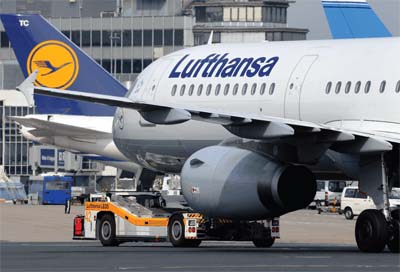
 India is now our second-largest intercontinental market anywhere in the world, having overtaken China in terms of the number of frequencies. At the moment, we are looking at roughly 11 flights a day coming into India from our four hubs in Europe: Frankfurt, Munich, Zurich and Rome. The Lufthansa legacy in India spans decades; our first flight was almost 70 years ago. Instead of looking at short-term measures, we are looking at very long-term developments in the country. One of the topics you may have read about is the expanding partnership between the Lufthansa Group and Air India, where we are in the process of developing joint business agreements.
In terms of tourist potential, this connectivity dramatically increases the accessibility of India to travellers from all over the world. Whether it is Germany, Switzerland, Europe or North America, we are bringing in literally thousands of seats every day. We are increasing capacity in India. Last week, we introduced our second daily Airbus A380 to India. We now fly daily with the A380 from Munich to Delhi and, since last week, also daily from Munich to Mumbai. On top of that, we will launch a new route at the end of October from Zurich to Bengaluru, five times a week non-stop, connecting Switzerland with South India’s Silicon Valley. Connectivity into India, we believe, is the cornerstone of developing not only tourism potential but also business ties between countries.
Subhash Goyal: Mr Aloke Singh, IndiGo has the largest domestic network in the country and is now moving towards a bigger international and long-haul role. What do you have to say?
 Aloke Singh: Taking a cue from Kevin, we have the largest network in the country, among the largest short-haul international networks, and now we are building the long-haul side of the business. Tourism and aviation are essentially two sides of the same coin. If you go back in time, aviation as an industry has put many Indian cities on the global map, and all airlines have contributed to that. We have also put a very large number of global destinations on the Indian outbound map.
I was struck by what the president of WTTC said: that there seems to be a growth paradox. Why is one segment of the business so under-indexed when the other segments have been growing? Outbound has outpaced inbound. There was a time, many decades ago, when inbound was bigger than outbound, but steadily the gap has increased. Domestic has been booming, but inbound has stayed stagnant. Even within foreign tourist arrivals, it is pure touristic leisure that seems to have shrunk over the last eight to ten years. That is the fundamental issue we should be talking about.
Subhash Goyal: Mr Nipun Agarwal, Air India is an iconic airline and a brand that every Indian is proud of. We hope it will go back to its old glory of being one of the best airlines in the world. What are your plans?
Nipun Agarwal: Travel and tourism go hand in hand. We are joined at the hip, and I think the biggest reform the government has undertaken in recent times is the privatisation of Air India. The growth this has unleashed in Indian aviation is unprecedented. In the last four years, the amount of capacity we have added has been unprecedented. We have grown exponentially, both domestically and internationally. In the next five years, with the 600-aircraft order we have, we will be doubling our capacity in every market in which we are present.
Air India was conceived as an international airline. Its DNA is international. Even today, two-thirds of our business comes from international. Our strategy is very simple: to double down on that idea, grow international, be the dominant player in international travel from India, connect India with every major city in the world, and also connect every major city in the world through India wherever we are geographically positioned to service the demand.
Air India is an iconic airline. It is the pride of the nation. We are on a mission to restore Air India to its past glory. We want to build an airline that every Indian can be proud of—an airline that evokes trust, delight and respect among stakeholders.
Subhash Goyal: What does India need to do to convert its tourism potential into long-haul passenger traffic? Is it more bilaterals and seat entitlements, better second-tier city connectivity, or something on the ground once the tourist lands?
Kevin Markett: We heard the previous panel go into some detail about the dynamics around visas and airport facilities, so I will not go into that again. There is a lot of potential for positive improvement in that respect. The main key is the connectivity that is required. Without connectivity into a country, everything else is essentially a non-starter. On the political front, there are many things that can facilitate the easier movement of people, but it is reciprocal on both sides of the network you are flying to.
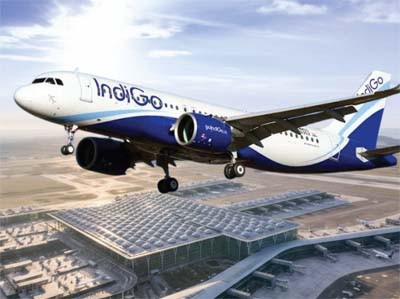
For us, we see significant growth in India. We believe in India and in that growth. That is why we are investing in bringing our newest aircraft into the market and expanding our footprint. Development in infrastructure always makes it easier. I have to say that the airports we operate from in India are some of the best in the world.
 Subhash Goyal: We are proud of that.
Kevin Markett: Having said that, some processes and procedures can be improved to create an even more seamless journey. I know our friends at Air India are working on one such process with through check-in and baggage from Varanasi. Initiatives of this kind will make it even easier. You travel with us to any point in Europe and collect your bags at the final point, no matter which country you fly into. Little things like that can make a big difference.
Subhash Goyal: IndiGo connects more Indian cities than any other carrier. Is India’s tourism bottleneck metro-to-metro capacity, or last-mile connectivity—from tier-two and tier-three city airports to the actual destination? What role can IndiGo play in bridging the gap between what is there and what needs to be done?
 Aloke Singh: If you look at the past decade, taking the industry together, capacity has doubled. In the next decade, building on Nipun’s point, capacity is going to double again. We have not seen this scale of capacity addition in any part of the world. Indian carriers today sit on 1,700 aircraft orders. This is the world’s largest order book. IndiGo’s own order book is a little shy of 900 aircraft yet to be delivered.
A large part of this capacity is going into both domestic and international markets. Both will probably double again in the next decade. I do not think connectivity per se is the bottleneck. On the supply side, the number of Indian airports has doubled in the last ten years. The country’s two largest natural hubs, Delhi and Mumbai, now have a second airport, and the dual-airport system has kicked in.
The impediment to growth is no longer capacity. It is really about the policy enablers for the next phase of growth. Kevin mentioned the hub-and-spoke system, where a domestic leg of an international flight is operated as an international flight and you can complete customs and immigration at the end destination or the first point. The pace of growth you are going to see will be quite different from what you have seen in the past.
Subhash Goyal: Mr Nipun Agarwal, what gap do you see in the current approach of stakeholders to improving tourism? How directly do inbound tourism, NRI travel and business travel factor into your route decisions?
 Nipun Agarwal: Almost two crore people travel by train every day. I remember when I started my career in 1994, I used to go from Delhi to Bombay by Rajdhani. It was almost impossible to get a train ticket. I do not think that situation has changed even today. Every single train has a waiting list, and you can get a seat that is reservation against cancellation—a very unique concept. It is not there in airlines; it is there in rail.
Almost 25 to 30 per cent of the demand is unmet demand that the railways are unable to meet every day. It is almost twice the demand that air can meet today. The reason we are unable to meet that demand is that the cost of flying in our country is very high.
If we can bring down the cost of flying, today’s air travel demand of four to five lakh passengers every day can double or triple very quickly. We need to make flying more affordable so that we can improve connectivity and air travel.
Likewise, in tourism, we have only one crore tourists coming into India every year. There are much smaller countries doing numbers ten or twenty times ours. We have the assets. We have the mountains, beaches and temples. We have everything as a country. It is a very large and diverse country. We have the hospitality and the culture.
The challenge is that airlines are selling seats and hotels are selling rooms. We are not selling our destinations. We are not selling our experiences. Look at the financial services industry. The Association of Mutual Funds in India came together and started the “Mutual Funds Sahi Hai” campaign, and see how the mutual fund corpus has grown over the last ten years. The numbers are mind-boggling.
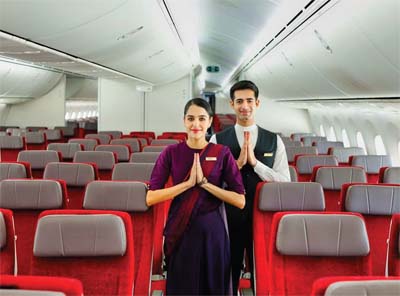 Rather than marketing airlines or hotels, we need to market the country, both domestically and internationally. That is how we will attract more people. We need to improve the customer experience, do more marketing and improve connectivity. If we do these three things, the numbers can move up very rapidly.
Subhash Goyal: Very rightly said: either we are marketing airlines or we are marketing hotel rooms. It is high time that airlines partner with tour operators, travel agents and the industry so that we market the destination together. That partnership is important—with the Ministry of Tourism, tour operators, travel agents and the industry—so that we can market India as a destination.
Air India also carries the symbolic weight of a national carrier, a flying ambassador for Indian tourism abroad. Practically speaking, how does that translate into commercial decisions, route choices, product design and partnerships with tourism boards?
Nipun Agarwal: We work very closely with ministries of tourism, not just in India but around the world. Every time we start a new flight, it is about marketing India in that country and that country in India. We work very closely with airports, ministries of tourism and trade, and governments to build that route and market.
Deploying a wide-body aircraft on a particular route or in a market is not an easy decision. It is a huge investment. We spend a lot of money and time marketing the potential of that route on both sides—India and the particular market. When we launch a new route, we advertise a lot. We spend money marketing foreign destinations in India, but equally, we spend a lot advertising India in every foreign country in which we operate. We are promoting two-way travel and India in every possible way, because the airline is the first point of contact for any person who wants to visit the country. The first impression is formed through the airline.
Subhash Goyal: Kevin, if you had to bet on one route or city pair that would surprise everyone with its tourism growth over the next three years, what would it be?
Kevin Markett: I will not make any statements about the next big launch of the Lufthansa Group, but the way India is developing airports and infrastructure, and the way domestic connectivity is growing, there is a lot of potential for future routes of the Lufthansa Group and other airlines in India. We are excited about that.
Subhash Goyal: Where should the Indian government and airport operators be investing to actually move the needle on tourism traffic?
Aloke Singh: We have to work together—the airports, airlines, stakeholders and policymakers. If you look at the successful models, they integrate everything. We should be investing more, looking at joint promotional efforts and working together.