
Over 50 years of Tourism Advocacy
Building India's Travel Businesses
Destination Development Strategies for Sustainable Growth

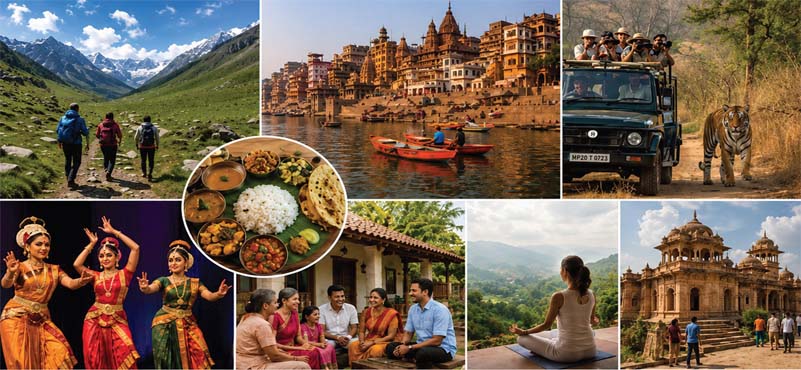
In the evolving global tourism landscape – marked by geopolitical uncertainties, shifting travel preferences, and the aftereffects of pandemics – countries are increasingly turning inward to strengthen domestic tourism. India, with its vast cultural diversity, geographical richness, and expanding middle class, is uniquely positioned to capitalize on this trend. Domestic tourism in India has grown manifold in recent years, driven by rising disposable incomes, improved connectivity, digital awareness, and a renewed interest in local experiences. However, to sustain and accelerate this growth, India must adopt innovative policies and strategies focused on product development and diversification, and new destination development in order to strengthened its tourism supply chain.
The Need for New Destination Development
While iconic destinations such as Jaipur, Goa, and Kerala continue to attract large volumes of tourists, overdependence on a few established circuits leads to overcrowding, environmental degradation, and uneven economic benefits. Developing new destinations helps:
- Distribute tourist traffic more evenly
- Promote regional economic development
- Preserve cultural and ecological sustainability
- Enhance tourist experiences through diversification
New destination development involves identifying untapped or underdeveloped locations and transforming them into viable tourist hubs through infrastructure, marketing, and community engagement.
Guiding Principles for Destination Development
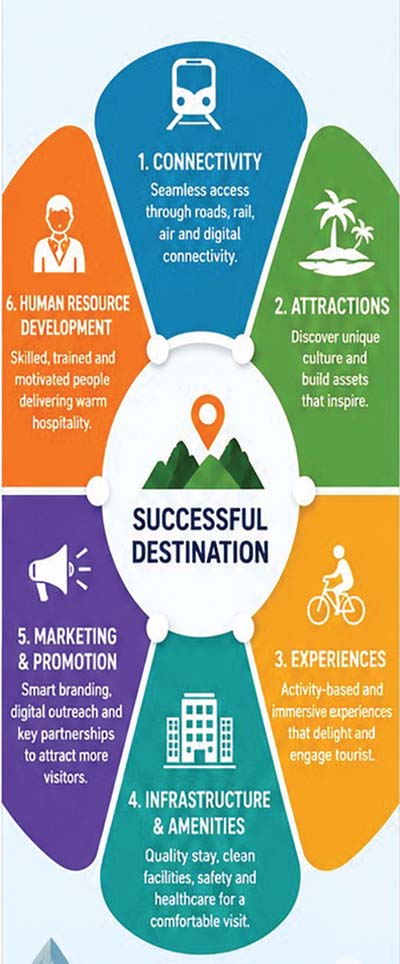 To ensure success, destination development must be guided by a set of core principles. The following six features are critical:
1. Accessibility and Connectivity
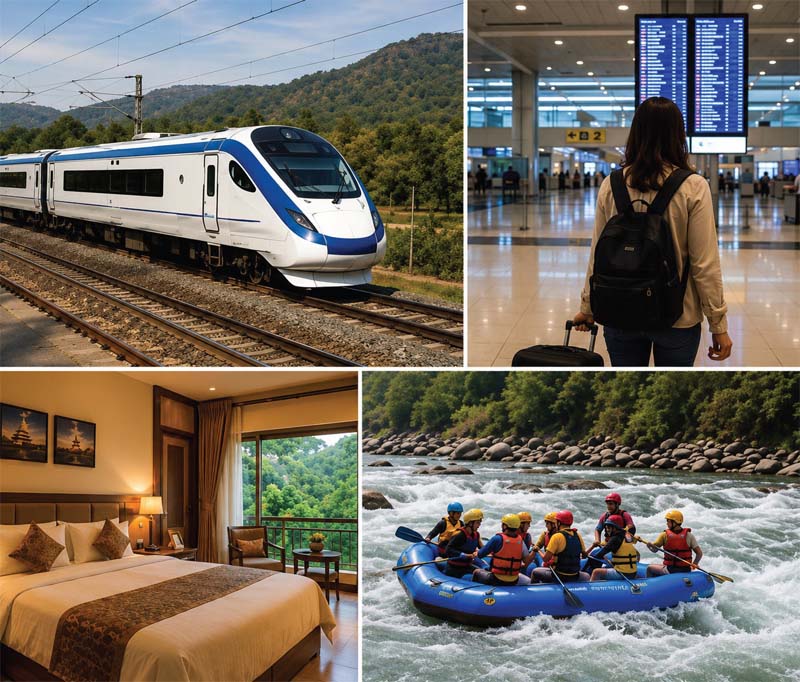
Accessibility is the backbone of any tourism destination. Without efficient connectivity, even the most scenic or culturally rich locations remain underutilized.
- Physical Connectivity: enhancing road, rail, and air infrastructure is essential. Regional airports under schemes like UDAN (Ude Desh ka Aam Nagrik) have already improved access to smaller towns.
- Last-Mile Connectivity: local transport options such as shuttle services, taxis, and eco-friendly mobility solutions ensures seamless travel.
- Digital Connectivity: digital access is increasingly important for bookings, navigation, and sharing experiences.
For example, improving connectivity to remote areas in the Northeast or tribal belts in central India can unlock immense tourism potential.
2. Attractions (Natural, Cultural, and Built)
Attractions are the core reason tourists visit a destination. These can be:
- Natural: Mountains, beaches, forests, wildlife sanctuaries
- Cultural: Heritage sites, festivals, local traditions
- Man-made: Theme parks, museums, spiritual centers
New destination development should focus on identifying unique selling propositions (USPs) of a location. For instance:
- A small village with unique handicrafts can be developed into a cultural tourism hub.
- A lesser-known hill station can be promoted for eco-tourism and wellness retreats.
Preservation and authenticity are key – over-commercialization can dilute the very appeal that attracts tourists.
3. Activities and Experiences
Modern tourists seek experiential travel rather than passive sightseeing. Hence, destinations must offer diverse activities:
- Adventure tourism (trekking, rafting, paragliding)
- Cultural immersion (homestays, local cuisine, craft workshops)
- Wellness tourism (yoga retreats, Ayurveda)
- Rural tourism (farm stays, village tours)
Designing activity-based tourism not only enhances visitor satisfaction but also increases length of stay and spending. For example, integrating local festivals or seasonal events into tourism calendars can attract repeat visitors.
4. Infrastructure and Amenities
Basic and advanced infrastructure is essential for a comfortable and safe tourist experience:
- Accommodation: Range from budget to luxury, including homestays and eco-lodges
- Sanitation and Hygiene: Clean public facilities, waste management systems
- Healthcare: Emergency medical services and first aid
- Safety and Security: Tourist police, surveillance systems
Sustainable infrastructure development – such as green buildings and renewable energy- should be prioritized to minimize environmental impact.
5. Marketing and Promotion
Even the best destinations require effective promotion to attract tourists. India must adopt innovative and targeted marketing strategies:
- Digital Marketing: social media campaigns, influencer collaborations, virtual tours
- Branding: Creating a unique identity for each destination (e.g., “Spiritual Circuit,” “Eco Trail”)
- Regional Campaigns: Promoting intra-state tourism and weekend getaways
- Public Campaigns: Initiatives like “Dekho Apna Desh” encourage citizens to explore domestic destinations
Data analytics and AI can be used to understand tourist preferences and tailor marketing efforts accordingly.
6. Human Resource Development
Tourism is a service-oriented industry, and skilled human resources are vital:
- Training Programmes: For guides, hospitality staff, transport operators
- Language Skills: To cater to diverse domestic and international tourists
- Soft Skills: Customer service, cultural sensitivity
- Entrepreneurship: Encouraging local youth to start tourism-related businesses
Empowering local communities ensures inclusive growth and enhances authenticity.
Roles of Key Stakeholders
Effective destination development requires collaboration among multiple stakeholders:
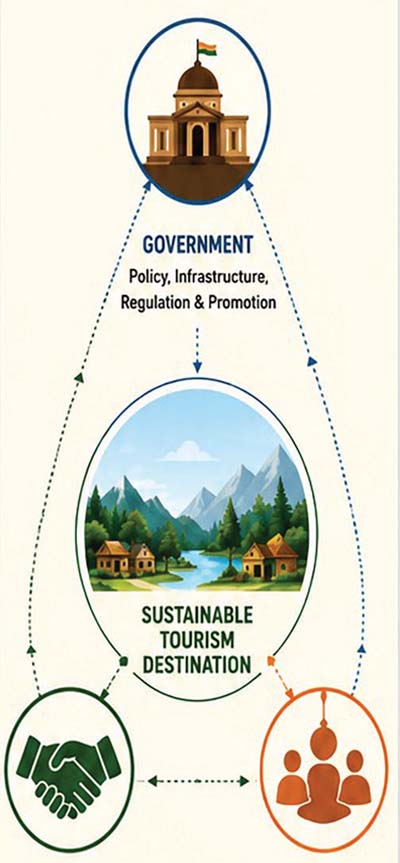 1. Public Sector (Government)
The government plays a pivotal role in policy formulation, infrastructure development, and regulation:
- Policy Framework: National and state tourism policies, incentives for investment
- Infrastructure Investment: Roads, airports, public utilities
- Regulation and Standards: Ensuring quality, safety, and sustainability
- Funding and Schemes: Programs like Swadesh Darshan and PRASHAD for thematic development
The government also facilitates public-private partnerships (PPPs) and promotes ease of doing business in the tourism sector.
2. Private Sector
The private sector brings in investment, innovation, and efficiency:
- Hospitality Services: Hotels, resorts, travel agencies
- Technology Solutions: Booking platforms, travel apps
- Marketing Expertise: Branding, advertising campaigns
- Innovation: unique tourism products and experiences
Private players can also adopt sustainable practices and contribute to community development through corporate social responsibility (CSR).
3. Local Authorities and Communities
Local bodies and communities are the custodians of the destination:
- Planning and Implementation: Municipalities and panchayat institutions manage local infrastructure and services
- Community Participation: Involving locals in decision-making ensures acceptance and sustainability
- Cultural Preservation: local traditions, crafts, and heritage
- Revenue Sharing: Ensuring that tourism benefits are equitably distributed
Community-based tourism models, such as homestays and cooperatives, empower locals and enhance visitor experiences.
Challenges and the Way Forward
Despite its potential, destination development in India faces several challenges:
- Over-tourism in popular destinations
- Inadequate infrastructure in remote areas
- Environmental degradation
- Lack of coordination among stakeholders
To address these, India must:
- Adopt sustainable tourism practices
- Use technology for smart destination management
- Promote regional and thematic circuits
- Encourage innovation and entrepreneurship
Conclusion
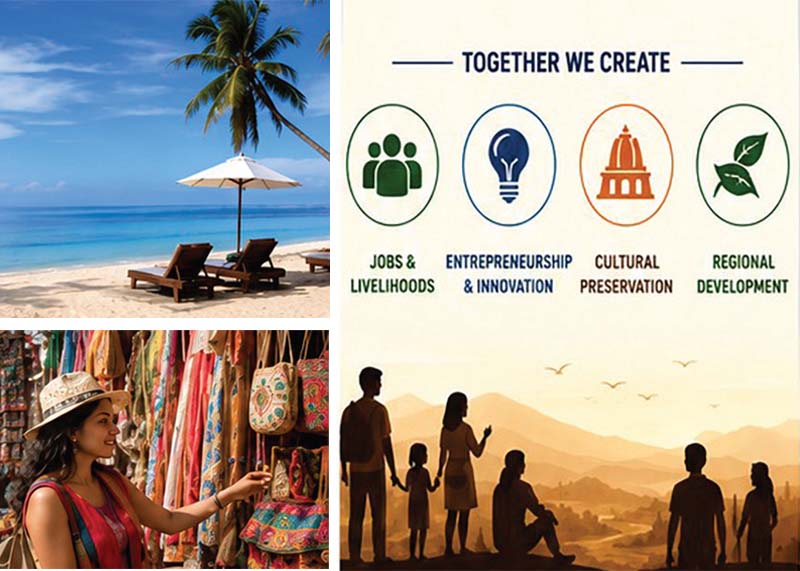
Domestic tourism in India is not just a sector of economic activity – it is a vehicle for cultural exchange, regional development, and national integration. In the current international scenario, where global travel may be uncertain, strengthening domestic tourism becomes even more critical. By focusing on new destination development guided by principles such as accessibility, attractions, activities, infrastructure, marketing, and human resource development, India can unlock its full tourism potential.
A collaborative approach involving the public sector, private enterprises, and local communities is essential to create sustainable, inclusive, and globally competitive destinations. With strategic planning and innovative execution, India can not only cater to its vast domestic market but also position itself as a model for tourism development worldwide.
ABOUT THE AUTHOR
Dr. Harsh Varma is Former Director, United Nations World Tourism Organization (UNWTO). Based in Madrid, he is consulted by NTOs globally; has formerly been a director, Ministry of Tourism, GOI.