
Over 50 years of Tourism Advocacy
Building India's Travel Businesses
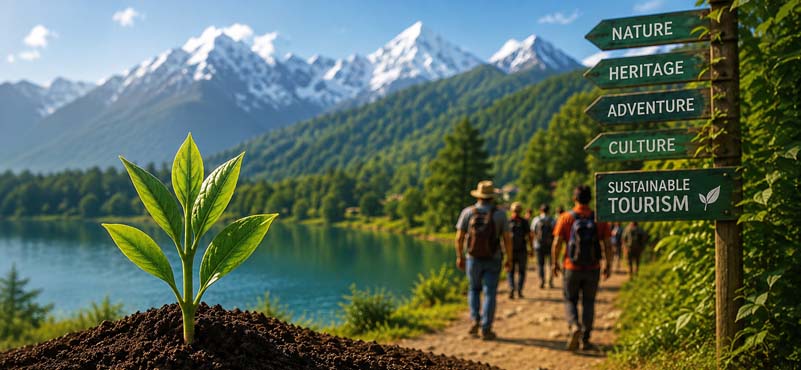
Tourism Becomes an Engine of Economic Growth!

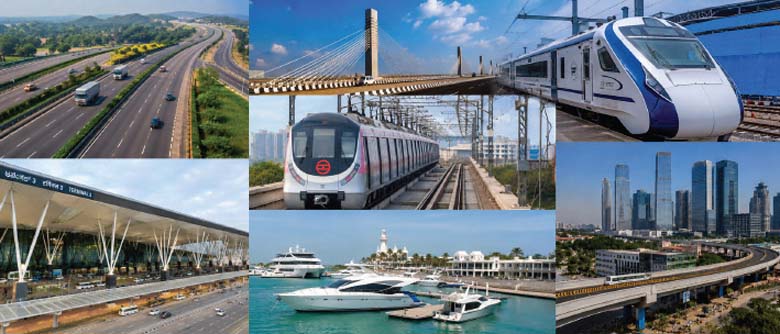
Yes, let us start with a disclaimer. That this is not a political piece, no indictment of any opposition, but a plain faced look at infrastructure build up, across the country. It is a comprehensive one, that cannot be overlooked, because it is also there in your face, defying all claims to the contrary. There is that old saying where John F Kennedy as quoted: America does not have roads because America can afford them – it is the roads that have made America. It is equally becoming true of India – public sector investments, especially post covid, have driven this new economy, making it possible for people to travel, more efficiently, economically when you see time spent, and the comparative ease in commuting. Join these with other developments such as UPI, mobile applications and you have it all. How inclusive is the growth, is not our question. It is adequate as normal citizens across price points are driving across the hills, the plains and around the rivers.
Yes, India is changing before our eyes. New highways are replacing old roads, airports are appearing in places that once lay beyond the tourism map, railway stations are being rebuilt, and destinations that struggled for attention are finding themselves connected to opportunity. Much of this transformation is visible in infrastructure, but nowhere is it more invested than in tourism, because tourism is both a beneficiary of change and increasingly a driver of it. For perhaps the first time in our history, tourism is not merely responding to development; it is helping shape it.
Those of us who have spent a lifetime in tourism have seen many phases. There were years when the industry struggled for recognition. Tourism was considered important, but rarely important enough. Governments acknowledged it, but often as a peripheral activity rather than a serious economic sector. There were occasions when even the Union Budget could pass without a meaningful reference to tourism. The industry continued to advocate its cause, convinced that one day tourism would be recognised for what it truly is—not merely an industry, but one of the most effective instruments available for economic growth, employment generation and social transformation.
Today, there are signs that this recognition is finally arriving. Tourism has moved closer to the centre of the national conversation. Prime Ministers speak about it. Chief Ministers compete to attract visitors and investment. States are investing in infrastructure and destination development. The private sector is expanding rapidly into new markets. More importantly, the Indian traveller himself has changed. Better informed, more adventurous and more confident than ever before, he is willing to travel further, stay longer and explore destinations that would scarcely have figured on his itinerary a decade ago.
The numbers tell their own story. India now records well over two billion domestic tourist visits annually, making it one of the largest tourism markets in the world. Travel and tourism contribute significantly to the national economy and support millions of jobs directly and indirectly. Hotel companies are expanding aggressively into new destinations, airlines continue to add capacity, and tourism infrastructure is receiving levels of investment that would have been difficult to imagine a generation ago. These developments are not taking place in isolation. They are part of a larger recognition that tourism is not merely a consumer of infrastructure; it is also a creator of economic opportunity.
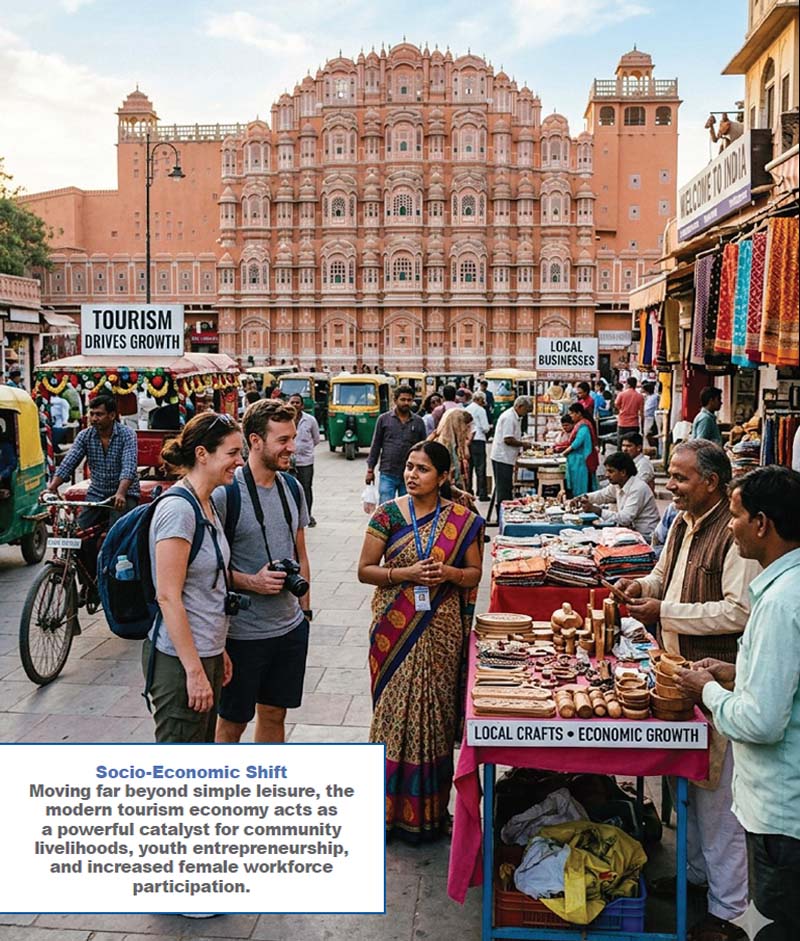
Yet tourism’s importance goes far beyond the movement of people. A factory creates jobs. A hotel creates jobs. But a destination creates an entire ecosystem. Tourism touches transport, hospitality, retail, handicrafts, entertainment, agriculture and a host of other sectors. It supports the artisan selling his craft, the guide interpreting a monument, the restaurant owner serving local cuisine, the farmer supplying fresh produce and the entrepreneur opening a homestay in a village that had never before considered tourism as an economic opportunity. Few industries have such a wide footprint or such an ability to spread benefits across different sections of society.
This is why the theme of the 22nd edition of BITB, “Paryatan is Bringing Parivartan”, is not simply a slogan. It is an observation. Across the country, tourism is already creating change. One sees it in destinations finding new purpose, in communities discovering new sources of livelihood, in women entering the workforce in larger numbers, and in young entrepreneurs creating businesses that would not have existed without the visitor economy. Tourism is proving that economic growth and social impact can go hand in hand.
Having watched Indian tourism evolve over five decades, one cannot help but feel that the industry stands today at a point of inflection. The opportunities before it are larger than at any time in recent memory, but so too is the responsibility to ensure that growth remains inclusive, sustainable and true to the character of the destinations it seeks to promote.
 At the same time, the industry finds itself at an important crossroads. India has never lacked attractions. Our history, culture, spirituality, geography and diversity are among the richest in the world. The challenge has never been what to show visitors. The challenge has been how to present it, how to interpret it, how to connect it and, perhaps most importantly, how to deliver an experience that matches expectations. Tourism succeeds not when we persuade people to visit. Tourism succeeds when visitors leave believing the experience was exactly as promised, or better.
This becomes particularly relevant as attention shifts towards lesser-known destinations. For many years, Indian tourism was built around a relatively small number of iconic places. The future, however, lies in widening that map. There are hundreds, perhaps thousands, of destinations capable of attracting visitors if developed thoughtfully and responsibly. The objective should not be to crowd every destination with tourists. The objective should be to understand carrying capacities, build appropriate infrastructure, involve local communities and ensure that growth remains sustainable. The world has already demonstrated the dangers of overtourism. India still has the opportunity to learn from those experiences rather than repeat them.
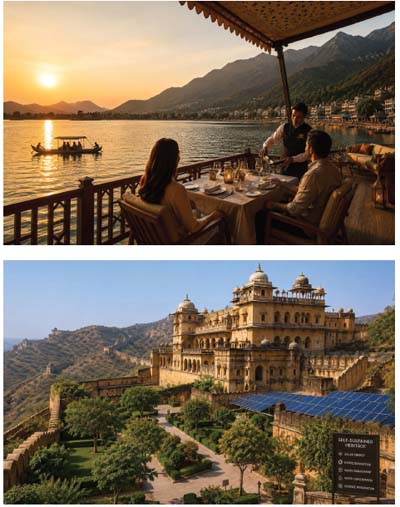
The same principle applies to heritage. For decades, conservation and commercial viability were often seen as opposing ideas. Yet some of the world’s most successful heritage destinations demonstrate that the two can complement one another. Heritage that remains isolated and dependent entirely upon public funding will always struggle for resources. Heritage that generates economic activity, supports local employment and creates meaningful visitor experiences stands a far better chance of sustaining itself. This is not an argument for indiscriminate commercialisation. It is an argument for intelligent stewardship. If heritage can become a living economic asset while retaining its authenticity and character, then both conservation and tourism stand to benefit.
Hospitality, too, is undergoing a remarkable transformation. Hotels today are far more than places where travellers spend the night. They are centres of employment, training, investment and entrepreneurship. They support local supply chains, encourage skill development and often become anchors around which broader economic activity develops. As branded hospitality expands into smaller cities and emerging destinations, its impact extends far beyond room inventory and occupancy statistics. Hospitality is becoming an important contributor to regional development and economic inclusion.
Meanwhile, travellers themselves are changing, and nowhere is this more evident than in the evolving definition of luxury. There was a time when luxury was largely associated with visible expressions of success—grand hotels, expensive possessions and exclusive experiences. Some of that will continue to have its place. Yet increasingly, travellers are seeking something less tangible but perhaps more meaningful. Time, privacy, authenticity and immersion are emerging as valuable commodities. The opportunity to spend time with an artisan, understand a local culture, participate in a traditional way of life or simply reconnect with nature is becoming a new form of luxury. Experiential travel is not replacing traditional luxury; it is expanding its definition.
When viewed together, these developments point towards a larger conclusion. Tourism is no longer simply about attracting visitors. It is about creating opportunities. It is about preserving heritage, supporting communities, generating employment, encouraging entrepreneurship and spreading economic benefits beyond major urban centres. It is about ensuring that development reaches places that may never attract large manufacturing investments but possess rich cultural, historical or natural assets. In that sense, tourism may well become one of India’s most inclusive growth stories.
The six discussions that form part of the 22nd BITB Conclave examine different aspects of this transformation. They explore the role of heritage, the importance of visitor-friendly cities, the evolution of luxury, the growing significance of hospitality, the opportunities presented by lesser-known destinations and the lessons that can be drawn from successful journeys across the industry. Each discussion addresses a different piece of the puzzle. Together, they seek to answer a larger question.
If tourism is already bringing change, how much more can it achieve?
Can it become one of India’s most effective tools for employment generation? Can it help preserve heritage while creating prosperity? Can it spread economic opportunity beyond major cities? Can it contribute to women’s empowerment and entrepreneurship? Can it become one of the country’s most inclusive growth stories?
These are not questions for the future. They are questions for today.
The evidence is already around us. The transformation has begun. The infrastructure is improving. Investment is growing. Destinations are emerging. Communities are participating. The opportunities are visible everywhere. The challenge now is to ensure that tourism fulfils its potential—not merely as an industry, but as a force for economic progress, social inclusion and national development.
That is the conversation before us.
And perhaps that is the opportunity before India.
ABOUT THE AUTHOR
 Navin Berry, Editor, CS Conversations, over five decades has edited publications like CityScan, India Debates and Travel Trends Today. He is the founder of SATTE, India’s first inbound tourism mart, biggest in Asia.
Blogs at: https://www.csconversations.in/nb-blogs