
Over 50 years of Tourism Advocacy
Building India's Travel Businesses
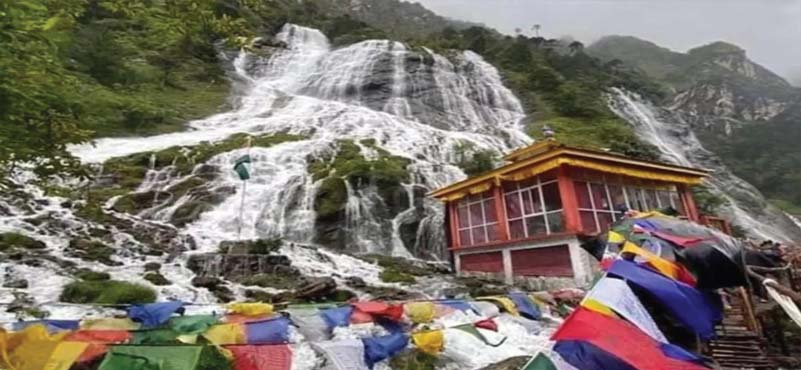
Chumi Gyatse: Where the Mountains Pray

The journey to Chumi Gyatse begins in the warm plains of Assam, where Tezpur slowly fades behind convoys, tea gardens, and rising hills. From there, the roads climb steadily towards Tawang through two great mountain arteries built by the Border Roads Organisation — the historic Balipara–Charduar–Tawang route and the later Balipara–Bhalukpong–Dirang–Tawang axis. These roads are more than engineering achievements. They are lifelines carrying soldiers, pilgrims, traders, and dreams into India’s Eastern Himalayan frontier.
As we moved beyond Tawang, the road towards Damteng unfolded like a ribbon through clouds, barren ridges, and icy streams. The air turned sharper and prayer flags appeared beside rivulets and cliffs. At small settlements along the route, local Monpa villagers greeted us warmly with “Tashi Delek.” Some young boys standing near BRO camp saluted enthusiastically and shouted, “Jai Hind.” We halted there briefly, shook their hands, and distributed sweet boxes that I always carried for my journey. They offered steaming cups of Suja, the traditional butter tea of the Himalayas, along with hot jhol momos. The short meeting was full of laughter, and quiet pride about the changing fortunes of their isolated region. In remote mountains, such small encounters felt deeply personal, binding distant frontiers emotionally with the nation below.
Further ahead lay Chumi Gyatse Falls, among the most sacred sites in Arunachal Pradesh. In Tibetan Buddhist tradition, “Chumi Gyatse” means “Holy Waterfalls Rosary.” Local belief holds that Padmasambhava (Guru Rinpoche), who is considered The Second Buddha in Tibetan Buddhism, created the 108 waterfalls by striking a rock with his rosary to defeat a rival Bon Priest Drenpa Namkha. Pilgrims regard these waterfalls for their supposed healing powers and spiritual purity. Prayer flags flutter continuously around the falls, while the sound of cascading water echoes across the valley like distant chanting.
Unlike famous tourist waterfalls, Chumi Gyatse possesses a solemn silence. White streams descend delicately from dark cliffs, appearing almost like strands of prayer flags flowing down from the heavens. Clouds drift constantly across the rocks, revealing and concealing the falls like a sacred ritual. There are no crowded cafés or commercial distractions here. The mountains themselves seem to guard the sanctity of the place.
At Damteng, villagers spoke openly about how BRO roads have transformed their lives. Earlier, journeys to Tawang consumed entire days and often became impossible during winter. Today, medical help, supplies, and tourists reach far more easily. Young people can travel for education and return home quickly. Tourism around Chumi Gyatse and Yangtse has slowly increased, bringing modest livelihoods to families who once lived in near isolation.
Driving back, I realised that these roads are not stretches of blacktop cut through mountains. Every bend carries the labour of BRO Karmyogis who battled snowstorms, landslides, altitude, and loneliness to connect these valleys. Because of them, pilgrims can seek blessings at Chumi Gyatse, villagers can reach hospitals and markets, and soldiers can guard the frontier with confidence. In these mountains, connectivity has become a form of service.
As we finally turned back towards Tawang, the mountains disappeared again behind thick clouds. Yet Chumi Gyatse remained etched in memory — a sacred whisper from the Himalayas where roads, faith, soldiers, and villagers together sustain life at India’s silent frontier.
Until the next Mystic Mile…