
Over 50 years of Tourism Advocacy
Building India's Travel Businesses
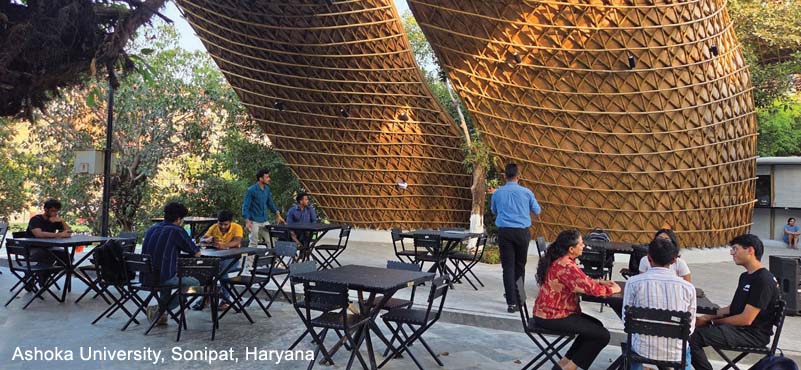
Bamboo: Redefining Sustainable Design in the Hospitality Industry

The hospitality industry today faces increasing pressure to adopt sustainable practices without compromising on aesthetics, durability, or guest experience. In this evolving landscape, bamboo has emerged as a highly viable material across many parts of the world—including the Maldives, Indonesia, Vietnam, and China—where it successfully combines environmental responsibility with design versatility and commercial practicality. In India as well, the use of bamboo in the hospitality sector is gaining momentum and is poised for significant growth in the coming years.
A Sustainable and Strategic Choice

Bamboo is an exceptionally versatile material that can be seamlessly integrated into multiple functional and aesthetic aspects of hotel infrastructure. Its applications span structural and architectural elements, interior design and décor (including lighting), flooring solutions, false ceilings, wall cladding, and furniture and fixtures. In architectural applications, bamboo is widely used in resorts, cottages, gazebos, and pavilions, particularly in eco-tourism destinations. Engineered bamboo—such as laminated beams and boards—can effectively replace wood and, in certain low-rise constructions, even steel. It is especially suitable for temporary or semi-permanent structures like beach resorts and nature retreats, where sustainability and speed of construction are key considerations.
In interior applications, bamboo panels, veneers, and laminates are ideal for wall cladding, ceilings, and partitions. They bring warmth, natural aesthetics, and improved acoustic performance to guest rooms and common areas. Bamboo is also increasingly used in lighting fixtures, decorative screens, and artistic installations, enabling hotels to create a distinctive and eco-conscious identity.
For furniture and fixtures, bamboo offers a compelling combination of practicality and elegance. Its lightweight nature supports modular and flat-pack designs, reducing transportation and installation costs. At the same time, it performs exceptionally well in outdoor settings such as poolside areas, gardens, and balconies due to its resilience. Engineered bamboo flooring is another strong application, offering durability comparable to hardwood. It is suitable for guest rooms, corridors, and banquet halls, delivering a premium finish while maintaining environmental responsibility.
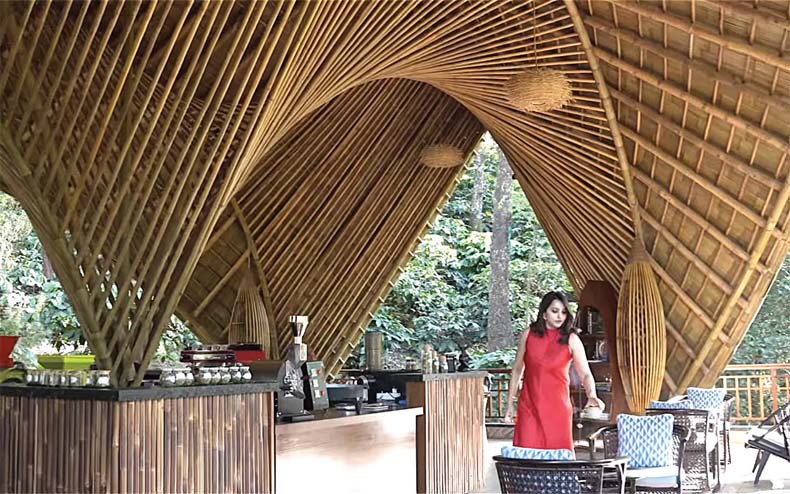
Why Bamboo is Recommended
From an environmental standpoint, bamboo stands out as one of the most sustainable materials available. It is among the fastest-growing plants in the world, with certain species capable of growing up to three feet per day. It regenerates naturally without replanting, requires minimal water, and typically does not rely on pesticides. As a result, bamboo acts as an effective carbon sink, absorbing more carbon dioxide than many conventional tree species.
For hotels, adopting bamboo significantly strengthens their ESG (Environmental, Social, and Governance) profile. It supports compliance with and attainment of green building certifications such as LEED, GRIHA, and other eco-labels, which are increasingly valued by environmentally conscious global travelers.
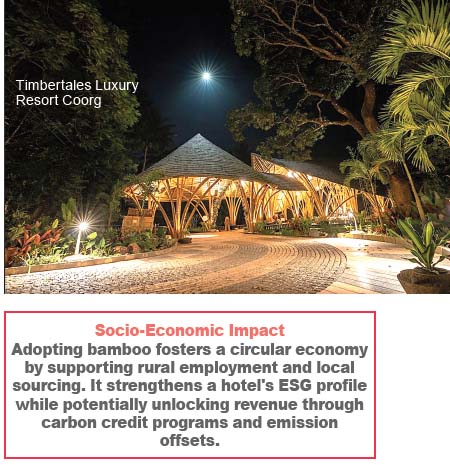
Beyond environmental benefits, bamboo also contributes to socio-economic development. Its cultivation and processing generate rural employment opportunities and encourage local sourcing. This supports circular economy models while reducing transportation costs and associated carbon emissions.
From a design and branding perspective, bamboo provides a natural, premium, and eco-friendly aesthetic that resonates strongly with modern travelers. It enhances a hotel’s identity as a sustainable and responsible establishment. With a growing preference for eco-conscious accommodations, bamboo interiors help create a calming, biophilic environment that improves overall guest experience and satisfaction.
Additionally, bamboo’s versatility allows it to be crafted into modern, traditional, or fusion designs, making it suitable across both luxury and budget hospitality segments. Hotels that incorporate bamboo can position themselves as distinctive eco-destinations, leveraging sustainability as a powerful element of their brand narrative—particularly appealing to international tourists.
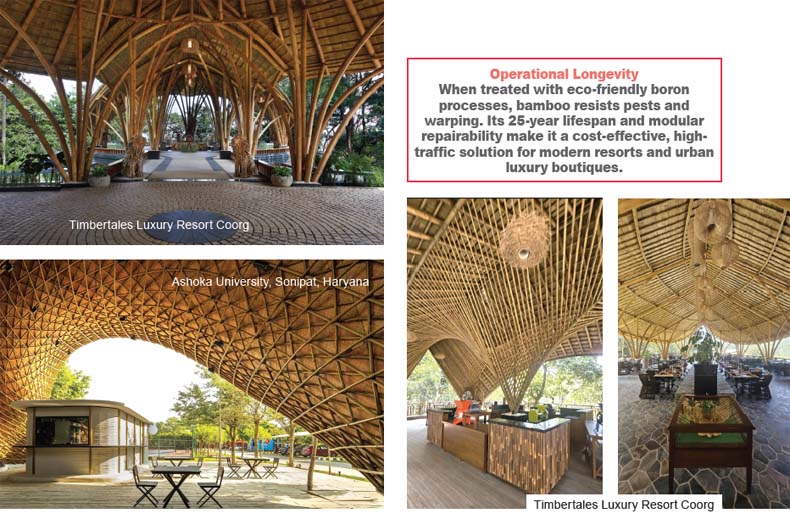
Does Bamboo Last Long Enough?
A key concern in the hospitality sector is whether bamboo is durable enough for long-term commercial use. The answer is unequivocally yes—provided it is properly treated, engineered, and maintained.
Bamboo exhibits remarkable mechanical properties, with tensile strength often exceeding that of steel and compressive strength comparable to concrete. Engineered bamboo products, such as laminated boards and beams, are dimensionally stable and resistant to warping, making them suitable for demanding applications.
Durability is further enhanced through proper treatment processes. Boron-based or other eco-friendly chemical treatments protect bamboo from termites and fungal attacks, while processes such as carbonization and lamination improve its strength, stability, and lifespan.
When used appropriately, bamboo structures and furniture can last 20–25 years or more, depending on usage and maintenance. Indoor applications typically have an even longer lifespan due to reduced exposure to environmental stress. Maintenance requirements are similar to wood, involving periodic polishing or protective coatings and avoiding prolonged exposure to moisture. An added advantage is that bamboo components are relatively easy to repair or replace, making them cost-effective over time.
Ideal Circumstances for Using Bamboo
Bamboo performs best when applied strategically, considering the environment, design intent, and operational needs of a hospitality project. It is particularly well-suited for forest lodges, beach resorts, and hill stations, where it integrates seamlessly with the natural surroundings and enhances the guest experience.
In urban settings, bamboo can be effectively used in interiors, furniture, and décor to create a distinctive sustainable luxury appeal. It offers a refreshing alternative to conventional concrete-and-glass designs, helping properties stand out through warmth and character.
Bamboo is especially effective in semi-open and outdoor spaces such as cafés, lounges, poolside areas, and garden seating. It performs optimally in naturally ventilated environments, where its aesthetic and functional qualities are fully realized.
Why Prefer Bamboo Over Conventional Materials
 Bamboo offers several advantages over traditional materials. It matures within 3–5 years, compared to decades for hardwood, thereby reducing pressure on forests and minimizing environmental degradation. Despite its rapid growth, it delivers strength comparable to conventional materials while maintaining a significantly lower ecological footprint.
Its low embodied energy and reduced carbon emissions make it an environmentally responsible choice. At the same time, bamboo is highly suited for human-centric, aesthetically pleasing designs that prioritize comfort and natural appeal.
Unlike plastics, bamboo is biodegradable and non-toxic, making it a safer and more sustainable alternative. Its use also reduces dependence on single-use plastics, further reinforcing a hotel’s environmental commitment and enhancing its brand perception.
Strategic Advantages for the Hospitality Industry
Sustainability is no longer optional—it is a defining market expectation. Bamboo enables hotels to stay ahead of regulatory requirements and evolving consumer preferences.
Hotels that adopt bamboo can command premium pricing by positioning themselves as eco-friendly destinations. This is particularly effective in attracting international travelers from sustainability-conscious markets.
Moreover, bamboo cultivation and utilization can be integrated with carbon credit programs, creating opportunities for emission offsets and additional revenue streams. This adds a financial dimension to its environmental advantages.
Conclusion
Bamboo is not merely an alternative material; it is a strategic asset for the hospitality industry. Its applications extend across construction, interiors, furniture, and utility products, making it a comprehensive solution for sustainable hotel development.
The benefits of bamboo—ranging from cost efficiency and durability to enhanced guest experience and environmental impact—make a compelling case for its adoption. With proper treatment and thoughtful design, bamboo can deliver reliable performance for decades.
It is particularly well-suited for eco-resorts, boutique hotels, and urban hospitality spaces seeking meaningful differentiation. In an era where sustainability defines success, bamboo offers hotels a unique opportunity to align profitability with environmental responsibility. Choosing bamboo is not just a material decision—it is a commitment to building a greener, more resilient future.
ABOUT THE AUTHOR
 Sanjeev S. Karpe is Director, Konkan Bamboo & Cane Development Centre (KONBAC)