
Over 50 years of Tourism Advocacy
Building India's Travel Businesses
A Simple Action Plan for the Government

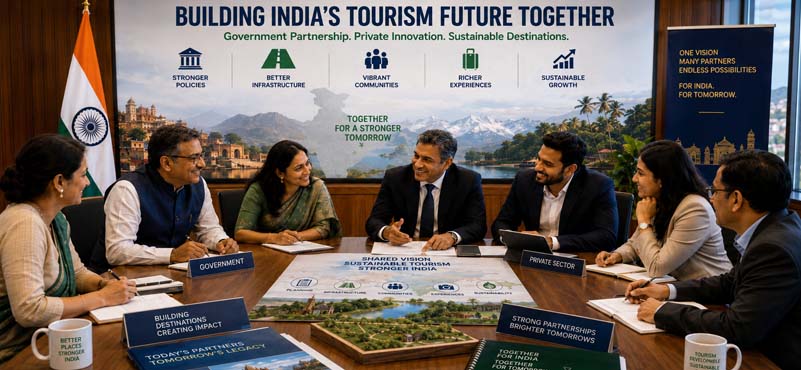
The Conclave underlined a few significant measures for the government to undertake, in order to truly realise the potential of tourism as an economic engine of development.
 1. Elevate Tourism within National Development
This was perhaps the strongest underlying message. Tourism should no longer remain primarily the responsibility of the Ministry of Tourism. Its implications extend to
- Urban Development • Civil Aviation • Railways • Highways • Culture • Housing • Environment• MSMEs • Skill Development
The discussions were effectively saying:
Tourism needs a whole-of-government approach.
2. Shift from Promotion to Destination Development
This came through repeatedly. Government has traditionally focused heavily on promotion.
The conclave repeatedly argued for planning, visitor readiness, destination management, interpretation, community participation. Promotion follows.
3. Make Indian Cities Visitor-Friendly
This may have been the clearest operational recommendation. The discussions almost produced a checklist.
- Walkability • Signage• Cleanliness• Safety• Mobility • Public spaces• Night-time confidence • Universal accessibility.
This is a government agenda.
4. Develop a National Programme for Lesser-known Destinations
The conclave did not advocate promoting hundreds of places immediately. It advocated identifying, planning, sequencing, preparing, and then promoting. That is a very different approach.
5. Bring Heritage into the Economic Mainstream
This discussion went beyond ASI. The Government was effectively being asked to see heritage as economic infrastructure, not merely protected infrastructure.
6. Encourage Hospitality Beyond Metropolitan India
The discussions recognised hospitality as a development catalyst. Government’s role therefore becomes connectivity, planning, destination readiness, ease of investment.
7. Make Communities Partners
Almost every session implied this. Communities should participate before, during, and after tourism development.
8. Improve Institutional Coordination
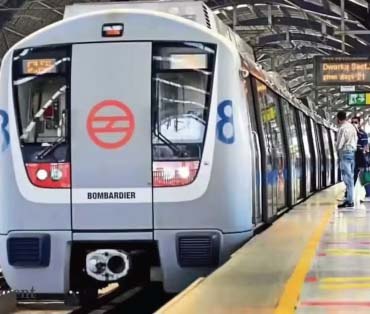 This came up repeatedly though indirectly. Many problems discussed were not tourism problems. They were municipal, transport, planning, heritage, or governance issues. Some mechanism for coordination appears necessary.
9. Measure Tourism Differently
The discussions repeatedly questioned numbers. Instead, they valued visitor experience, quality, employment, community benefit, heritage, destination improvement. Government measurement systems may eventually reflect this broader perspective.
10. Think Beyond Annual Schemes
The discussions consistently favoured continuity. Tourism requires patient planning, institutional memory, policy consistency. This was one of the strongest philosophical conclusions.
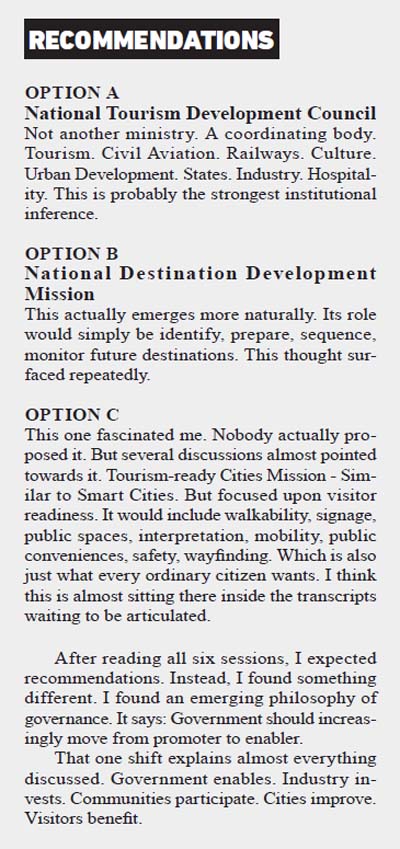
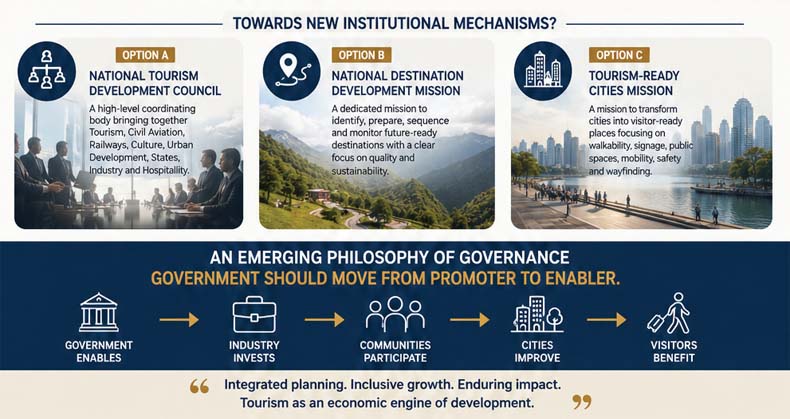
Was there any hint towards a new mechanism or body?
Nobody explicitly proposed one. But… reading all six sessions together… I think three possibilities quietly emerge.