
Over 50 years of Tourism Advocacy
Building India's Travel Businesses
A Vision for Delhi: India’s Capital, a Global Destination

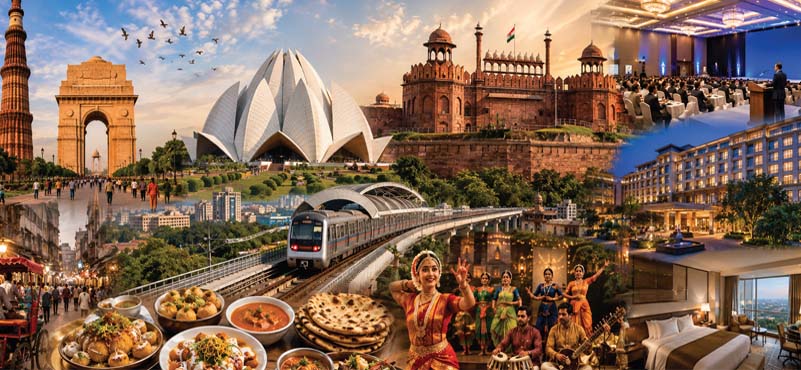
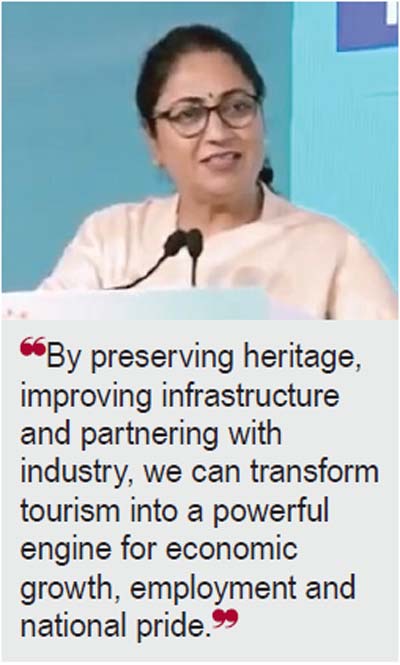
Delhi Chief Minister Rekha Gupta presents a vision of transforming Delhi from a transit gateway into a destination in its own right. Highlighting the city’s cultural diversity, heritage, food, nature and emerging tourism initiatives, she calls for collaborative efforts to make the national capital a vibrant, accessible and globally competitive tourism hub.
India is a big country. There are so many states, cultures, traditions and languages. Above all, it is such a beautiful country. Every state has destinations of its own. When I think about it, I realise how rich India is. Whether it is beaches, mountains or greenery, we have everything within our country. These are destinations we should see first. Every Indian should see them, and you are working on this mission.
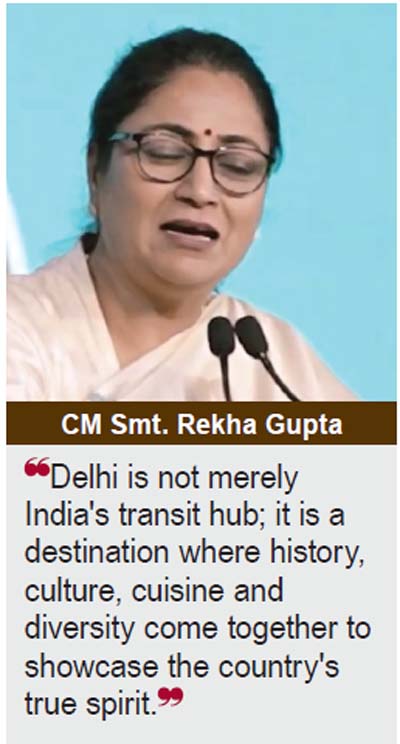 When the FAITH team came to invite me, along with Nagpal ji, I really liked your topic. It is very close to my heart. People have always used Delhi as a transit hub. They land in Delhi because they get connectivity from here, and then travel onwards to Himachal Pradesh, Uttarakhand, Gujarat, the Andaman and Nicobar Islands, or any other state. But most people use Delhi only as a transit hub. Delhi itself is a magnificent destination, and we needed to work on this idea as well. We began working on it about a year and a half ago.
Look at Delhi’s culture. Delhi is a mini-India, a small part of India where people from every state live. We celebrate the festivals of the North-East, including Bihu, and festivals from the South with the same enthusiasm. The celebrations of every state find a place here. The wonderful food of every state is also available in Delhi. Whether you want food from the North-East, a Rajasthani thali, Gujarati food or South Indian food, you will find it here.
Delhi is a unique city when it comes to taste, and I can assure you that you will not find the taste of Delhi anywhere else in the country. You will not find Delhi’s famous chaat and pakodi anywhere else in quite the same way.
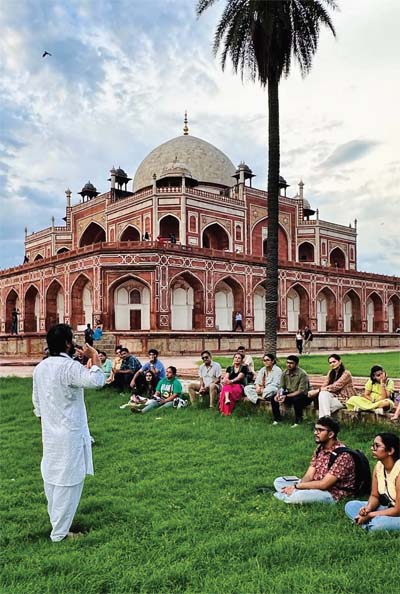
Then there is Delhi’s history and its development. Today, Delhi is the capital of the country. From the Red Fort to the Qutub Minar, every monument has its own story, connected with the story of India. If we bring all this together, tourism in Delhi becomes a very important segment. Puneet ji was telling me how tourism in Delhi could be increased.
 As you said, people want to see the capital of every country. If they go to France, Paris will certainly be on their itinerary. If they go to England, they will stay in London. Every capital has its own tourism value. In the same way, if a tourist comes to India, we should ensure that they stop in Delhi. This is the effort of the government, and I would like to see much more tourism in Delhi.
Until now, I felt that no government had paid enough attention to building a positive image of Delhi. This is what we have tried to do. We have magnificent monuments, but the information, ticketing, timings and access should be convenient for an ordinary tourist. People should be able to book well in advance and visit without any difficulty. We contacted many tourism organisations, including organisations such as yours, to improve this. Every monument in Delhi has a beautiful history of its own. The Delhi government is working to make these places more accessible to the public, easier to book and simpler to visit.
We have also worked to develop the concert economy in Delhi. In the past year, many major concerts have been held in Delhi which might otherwise have gone to Gurugram or Noida. Think of any major singer or artist: their events have taken place in Delhi, with thousands of people participating.
 We helped organisers obtain the facilities they needed. Because Delhi has multiple agencies, people often faced difficulties. We brought the process under a single-window system, and today it is much more convenient to organise a grand event in the city. It is a pleasure when the people of Delhi can enjoy these events. There are programmes for the youth and for people of every generation.
Our focus is strongly on the concert economy. We also want to develop large and distinctive venues where programmes can be held for crowds of one lakh or even five lakh people. The Delhi government is working to develop such destinations.
At the same time, the government is continuously working on Delhi’s legacy problems, whether pollution, traffic jams, garbage mountains or the cleanliness of the Yamuna. Delhi is a beautiful city—a place to live in and a place where visitors should want to spend time. We are working to make Delhi as clean and beautiful as possible.
We were just discussing what is happening with the Yamuna. A river is a great privilege for any city. We have to consider how the Yamuna can be developed as a riverfront destination and become part of Delhi’s tourism experience. I want to assure all my friends that, gradually, the work of cleaning the Yamuna will produce results. In the coming years, you will see a much cleaner and better Yamuna, where many projects can be started. Visitors will be able to enjoy its natural beauty and have a happy experience.
There are also many destinations in Delhi that have not been visible to people. Take our forest areas. When we go to Madhya Pradesh or Gujarat, people consider a jungle safari an important attraction. But most people do not know that Delhi, too, has the potential for a jungle safari. Even I did not know the extent of it before I became Chief Minister.
When I took on this responsibility, I saw Delhi’s forest areas and began discussing their revival. I realised that we have a very large forest segment. It is home to wild animals, beautiful deer, leopards, many other animals and a great variety of birds. A beautiful jungle safari is possible there, and we are working on it.
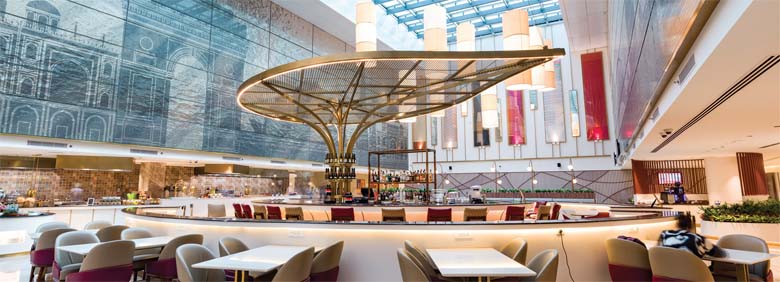
Delhi has monuments. Delhi has forests and the possibility of a jungle safari. Delhi has a river. Delhi has excellent food and a rich culture. In the heart of Delhi, one can see performances by great artists. Delhi also has monuments of national importance. It is the capital of the country, and I believe it is our duty to present Delhi—and through Delhi, our country—to the world as an important tourism hub.
I would like to mention one more important aspect. Dr B. R. Ambedkar, who gave the country its Constitution, is respected by all of us. When we travel abroad, people visit the homes and memorials associated with important national figures, often after buying expensive tickets. Delhi has a deep connection with Babasaheb. Of the five places associated with his life, Delhi is where his Mahaparinirvana took place, where he left his body. The Narendra Modi government has transformed that place into a magnificent memorial.
 Delhi’s religious places are also symbols of people’s faith, whether the Jhandewalan Temple, Chhatarpur Temple or Kalkaji Temple. Religious attractions such as Akshardham and the Lotus Temple are also very important to Delhi’s tourism. We should work on this segment as well.
We are also preparing a film policy for Delhi. Until now, if a filmmaker or production company wanted to come to Delhi, it did not receive the necessary facilities easily. Through the Delhi Film Policy, we are moving forward to provide the industry with a much better system. The Delhi government has also organised its own film festival for the first time, with the participation of many people from the film industry.
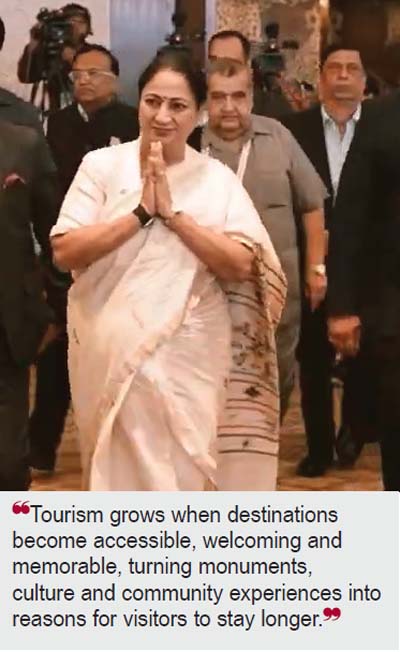
By working on each of these segments, and by working together with FAITH, I believe we can do a great deal for Delhi. We would like your suggestions and would like to connect your passion and experience with the city. Whatever advice, suggestions or presentations the industry gives us, we would certainly like to listen to them and consider them.
The hotel industry is a very strong industry, and we are working to make it even stronger. Together, we can ensure that Delhi is not seen merely as a transit hub, but as a destination in its own right—a city where visitors stay, explore and experience the many dimensions of India.