
Over 50 years of Tourism Advocacy
Building India's Travel Businesses
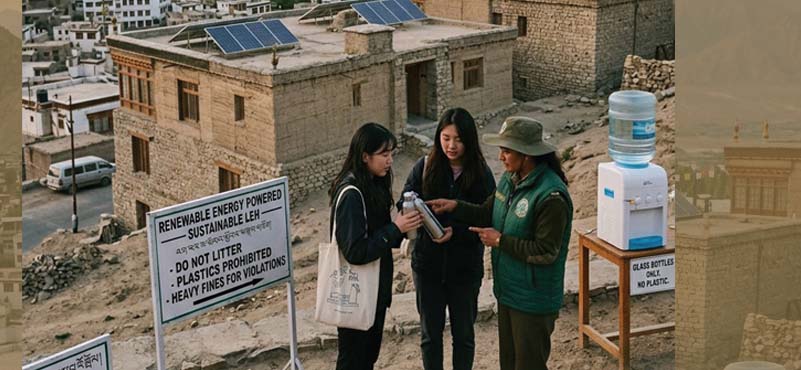
Inching Towards Net Zero Emission

Responsible tourism is a tool for achieving SDG’s as outlined by the United Nations
We as responsible humans have to think in terms of PERPETUAL SUSTAINABILITY. Not just long term sustainability, if are to think of our future generations.

Tourism is a high consumer of energy and resources and a high producer of pollutants and waste. The higher the experience the higher the environmental cost. Uncontrolled tourism and human intervention shall contribute to climate change. The difference between a 2 degree to 4 degree centigrade rise in temperature implies extinction of humans, animal and plants from planet earth.
There are several important actions needed to counter the negative impacts and contribute to achieving the SDGs of sustaining life on land and below water, good health and wellbeing, sustainable communities, clean water and sanitation, responsible consumption and production, decent work and economic growth, and prevention of climate change. These are some of the SDGs that tourism can directly impact through our actions as below :
1. There has to be a transition in the tourism industry to renewable energy and reduction of carbon emission through innovation and technology. This includes hotels, travel and the transportation sector.
2. There has to be a redefinition of luxury vs comfort to discourage conspicuous consumption which borders on human greed to consume more and more. “Experience” has to replace luxury. Local consumption has to be encouraged and imports with a high carbon footprint have to be discouraged.
3. Hotels must innovate and change service designs and introduce environment charters and guidelines for employees to follow.
4. Architects must plan and design buildings and use materials that are environment friendly.
5. Plastics are the worst enemy of mankind and single use plastic must be banned at the production stage. Processed drinking water in glass bottles, as in earlier days, must replace the plastic water bottle and the RO Plant.
6. It is devastating to see the plastic water bottle consumption specially in banquets and large gatherings. The 200 ml water bottles should be banned and replaced with water dispensers and glass bottles.
7. Waste management is key to creating good destinations. To achieve this a major movement is required to bring to shame dirty destinations and change the mindsets of both tourism service providers and tourists who are worse offenders. This can be done only through sensitization and education.
 Implementation is the key to achieving the above objectives and I strongly feel it is now time to take decisive strong actions against violators. However the following steps are recommended:
1. Since this requires a change of mindset, education in schools on all aspects of being a good responsible citizen and learning hygiene, sanitation, energy conservation, road rules, garbage segregation etc. is a must. Not as a separate subject but an interactive discussion held for half an hour session from class 4 to 10.
2. “Do’s and don’ts” should be displayed at all tourism sites and violators fined heavily. A system of tourism wardens combined with guides can be created. Polluting plastics and synthetic packets must be checked and retained at tourism site gates
3. Workshops must be conducted for stakeholders by high tourism density monuments and states, including contractual staff, to sensitize tourism service providers. This would also lead to exchange of best practices.
4. The unorganized sector, which constitutes about 70% of our tourism service providers must be brought under control.
5. Energy and environmental audits must become mandatory for classification.
6. Carrying capacity studies must be conducted and new destinations must be developed.
Above are some of my thoughts. If we are to GO GREEN and SAVE MOTHER EARTH there has to zero tolerance on environmental matters.