
Over 50 years of Tourism Advocacy
Building India's Travel Businesses
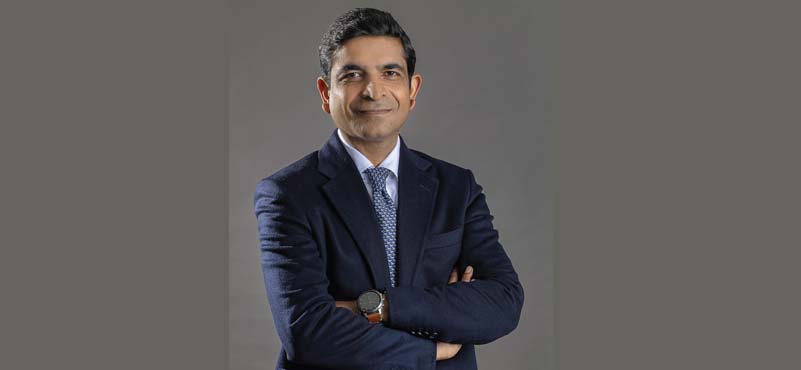
Ashish Jakhanwala : An Encounter and a Conversation

Ashish Jakhanwala, Chairman, Managing Director & Chief Executive Officer of SAMHI Hotels, a leading hotel ownership and asset management company in India in conversation with Navin Berry, talked about Indian hospitality’s strong growth.
The Encounter
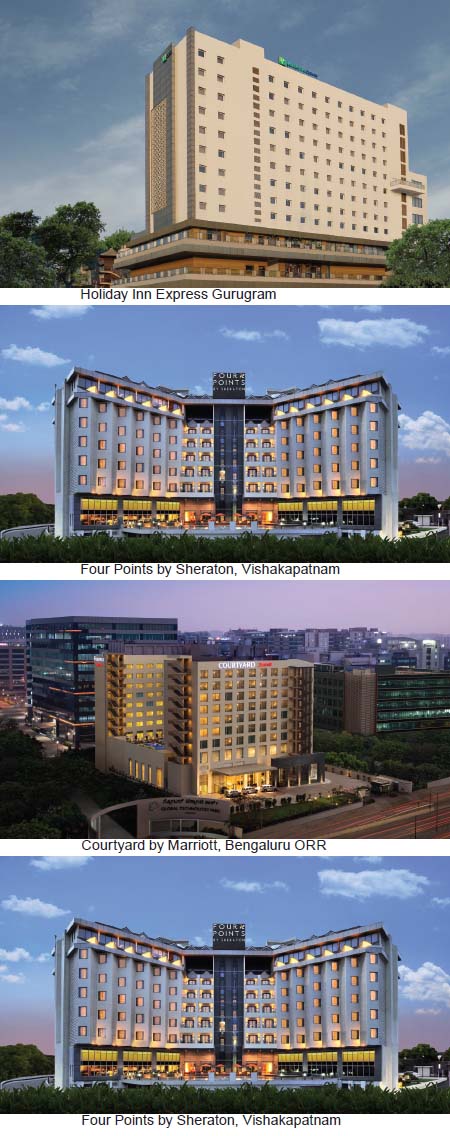
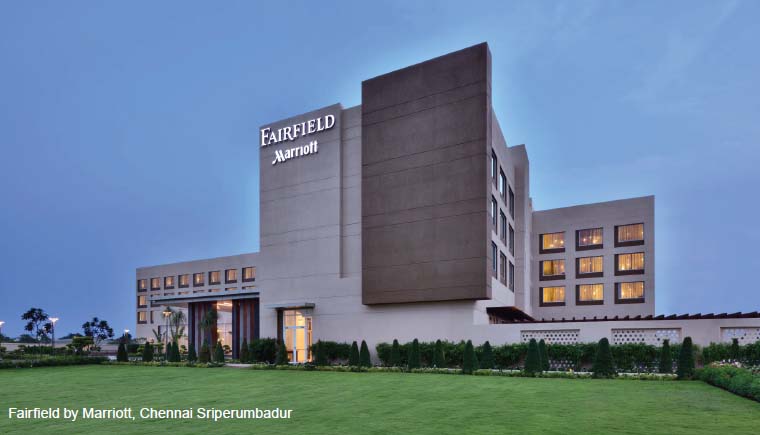
I had been meaning to connect with him for some time. His model has been unique, buying into assets instead of going asset light, which is the industry way to go. He does not have a builder’s background, like the Raheja Group behind the Chalet Hotels, another industry peer that has been building assets. In just two decades, he has acquired an impressive portfolio of distressed properties, bought them, upscaled them and given them to be run, by established operators. Two primarily, the Marriott and the IHG, and with them, he has created an operational centre for each, funded by SAMHI. These overlook the operations from the owners’ side.
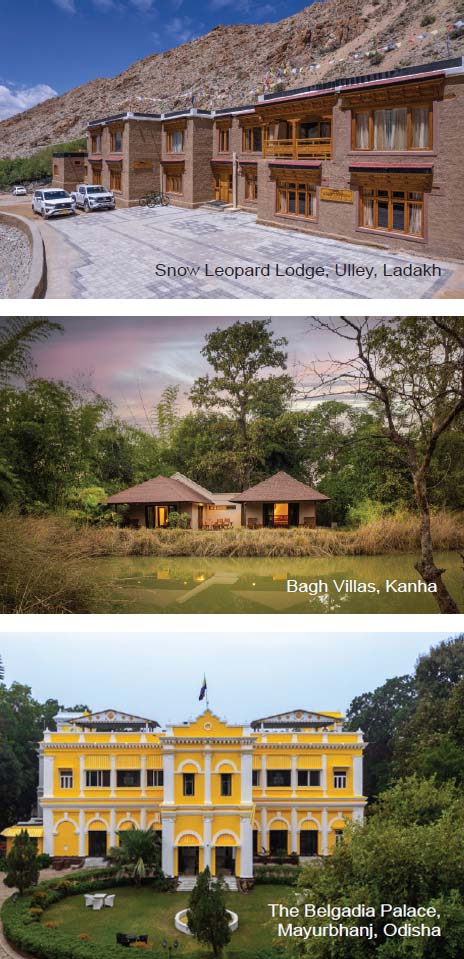 Recently, he bought into RARE, an experiential chain purely working on an asset light model, more as a marketing company, one that created a name for itself in the last twenty years in this niche space. Being an asset strong model, why would SAMHI venture into buying a group that has worked on exactly the opposite strategy? Along with RARE comes the reputation and outreach of Shobha Mohan, its founder, who will continue with the business. Ashish saw this as an opportunity, the new rising, into experiential, and the one space wherein he sees his future acquisitions as well, as and when they arise. These would be smaller properties, naturally, but which would provide good returns on investment, giving industry and traveller preferences as seen in similar other ventures of recent vintage – witness ITC’s Storii and similar.
At his recently acquired and handsomely fitted offices in Aerocity, New Delhi, we caught up with Ashish. At 51 years of age, he has miles to go, before he can take a pause. With 34 operational hotels, 5500 plus keys, in 13 cities with 11 brands, his appetite remains strong and ready to acquire more.
His new office was inspiring, minimalistic and yet profound. It is an open atmosphere where his own working desk is just another, though in the corner just as you enter the big open hall. His backend has been outsourced, like an implant, and his own staff strength, currently at around 35, sits across the vast area. I could see the planned seating appropriate only for the next few years, given his growth forecast.
Modest and unassuming, breathing confidence and positivity, Ashish was all humility and deep respect, as he would give to a senior in the industry, a feature that has fast become a relic of the past. No ‘first’ name conversations, courteous, after the meeting that lasted a full hour, he insisted on walking me to the elevator, down to the entrance lobby, and then walking out of the building, waiting for me to enter my car that took a while.
All in an afternoon’s work, a warm and courteous gesture that I could recall of similar vintage, only some 40 years ago, when I first called upon the legendary Rai Bahadur at his farm. He insisted upon walking me down to my car, a considerable distance away, but said at his age, walking was good for his health! Such walks indeed, are also good for keeping contemporary egos in check, of which we see in abundance, especially in recent years, when success seems to have gone into successful heads.
So, an engaging encounter. One in which we can see the rise and rise of the young owner hotelier, one who will go a long way, assuming he continues to keep his head down, as he does now.
The Conversation
Are we seeing a bit of an uptick when it comes to the kind of travel trends that we’re seeing currently given the fact that there’s been this call by the prime minister to try and go more domestic than international?
 The travel trends are becoming stronger on account of two things. Number one, the growth of business travel in India. Even with all the headwinds that we’ve seen over the last one year, we’ve seen the revenue growth to be upwards of 10% which is very representative of how strong the demand has grown. So, it clearly tells you that the Indian economy at the baseline level is very strong, continues to grow and that feeds demand for hotels.
The second trend that we’ve seen and that kind of started during COVID is a huge amount of interest in Indians to travel within India. So, the domestic travel has really taken off since COVID. In addition, we have seen a concerted effort by the government, directly led by the PM for encouraging domestic travel and also helps the hotel sector in the country immensely.
So, both things coming together is what is holding on the hotel sector performance at a really decent and reasonable shape in spite of all the headwinds we’ve seen.
Your business model is somewhat different, and perhaps even unique, important to understand its contours.
There are lots of things which make the SAMHI story unique and I believe, compelling. The number one is the fact that we are a pure asset owner and asset manager. Historically in India most of the hotels were owned by the brands such as Taj, Lemon Tree or Oberoi Hotels. Of course, in the last few years we’ve seen emergence of pure ownership companies like Juniper, Ventive Hospitality but we are one of the largest companies in terms of number of rooms when it comes to multi-branded hotel ownership in India.
The second thing which makes us pretty unique is the fact that we applied an acquisition model rather than building new hotels and that kind of differentiates us from even the other pure owners because some of the other pure owners historically have built large part of their portfolio by building hotels. We have built large part of our portfolio by acquiring underperforming hotels and therefore that sets us apart.
Now that of course has some advantages. The first advantage is the capital to revenue cycle is much shorter and therefore very proudly we say that SAMHI which today would be in terms of number of rooms probably the fourth largest hotel company in India has been created in the last 15 years. The next youngest peer for us would be 20-25 years old. Even in terms of revenue within a short span of 15 years, we would be probably the seventh largest company in terms of hotel revenues. So, our strategy of not building hotels which have a very long lead time but acquiring underperforming, undermanaged hotels has allowed us to scale up and do that at a discount to replacement cost and see obviously show the sort of revenue growth and EBITDA growth that you were talking about earlier.
How is the share market treating you? How is your investor confidence playing out?
We speak to our investors very frequently because we’re a professionally managed company. So, in a company like ours, the voice of the board and the investors is obviously important. We haven’t really seen any fundamental concerns come out of our investors. Stocks trade at different multiples at different times and I think this is just a point in time as far as we are concerned, when we may be trading below our peers.
As management we are focused on delivering revenue, EBITDA and earnings. And even if the multiple was to remain stagnant for which we have no control, we think this company has significant upside because EBITDA is going to grow significantly over the next 3 to 5 years largely on account of the fact that we’ve invested that capital in assets. So, there is no fundamental concern that we’ve heard from either the analyst community or also from some of our core investors. Rest obviously you know well public markets have their own moods and temperaments but I think we will we will eventually reclaim what is a fair value.
 You continue to take on debt and funding at all points of time whether it’s about equity dilution or whether it’s about taking on new debt. Do you have any concerns on this aspect of your business?
Let me explain the different phases of a company’s evolution. When I started the company way back in 2011, the base was zero. You needed external capital to build capacity and that’s true for hotels, that’s true for any company including companies which call themselves asset light but they’re still a capital intensive because they need that capital to build infrastructure, sales and marketing, brand value, distribution etc. So, the first 10-12 years of the company was spent in us painfully building the capacity and building the capacity at the right price and building the capacity in the right markets. Today we are very confident that the free cash that we get from our company because of the installed capacity is more than adequate to fund future growth. So, you will see a lot of future growth in the company on account of new inventory being added starting next year till almost next 5 years and all of that is being funded from the cash flows coming from the company.
There are these inflection points in every company’s life cycle where a single pivotal point starts adding value both to the balance sheet and to the P&L. Often CEOs have to decide between the two. For us, what’s happening is that the free cash that we are generating is obviously helping us add new rooms. And on the other side, because our capex needs are less than our free cash, we will continue deleveraging. And that’s why I think we’ve indicated that on the long-term basis, we want the company to be at around 2.5 times net debt to EBITDA. And one explanatory statement there, we are an owner of asset. We are able to secure financing for 12 to 14 years. There are hardly any repayments in the first four to five years and the average pricing across the group is around 7.9%. So, when you look at such favourable debt terms, 2.5 times is an extremely healthy leverage ratio. People may compare it to other companies which don’t have underlying assets and therefore only get access to a four-five-year debt.
So therefore, today we have the ability to both grow the company and not exert any pressure on our balance sheet or take a dilutive action in terms of raising more equity.
And so, one you won’t be raising any more debt. You won’t be raising any more equity. You’ll be focusing on cash flow. Is that the right way to think of this?
We are about 3 times next debt to EBITDA including the capital we have invested in development projects. Once these are completed, we expect our revenues to be materially higher and so the debt becomes rather inconsequential.
It’s a classic case of the pain to install capacity, leverage that capacity to start producing free cash and once you get to that point then it’s the free cash which helps grow the company and create shareholder value for the long term. I will reiterate that our debt is based by asset security and hence is 12-14 years and hence does not expose us to any liquidity risk.
How many how many rooms do you add and therefore what’s the growth aspiration over the next couple of years just take us through that thought process.
We are adding approximately 1,500 rooms to our existing operating base of 4,500 rooms taking total inventory to circa 6,000 rooms. More important is the fact that most of this new inventory is in upscale segment where revenues tend to be 2 times of our portfolio average. So, the net impact of new inventory on our revenue potential will be significant. Over and above the 9%-11% same store growth, we expect incremental 5%-7% come from new rooms setting a strong growth momentum starting FY2028 onwards.
How to you select a hotel to acquire and then what do you see in a hotel operator when you partner with them.
We have acquired hotels where we see significant potential. We don’t want just a cheap purchase price, but we do seek a high level of value creation for us. We create value by improving the product, partner with a strong brand and drive high level of performance through our asset management framework.
The choice of operating partner/ brand is driven by how strong their global distribution and loyalty programs are, strength of their management team in Asia and India, given these are management contracts and not just franchise, their commitment to invest in India for building their operating/ management infrastructure and last but not the least, no conflict of interest.
Why has SAMHI decided to be Asset heavy when the current trend is to be asset light. How do you create value?
Both strategies allow you to create value, especially in a country like India. People often look at western markets and generalise asset light to be more valuable than asset heavy. In such mature markets, there is limited growth and poor operating leverage that sometimes limit ownership value but very large market size to allow asset light to scale up. India, on the other hand, has long term growth and very healthy operating leverage to allow asset owners to create long term value. At the same time, the market size is still small and so scaling up by only being asset light is challenging.
We create value by being able to acquire and operate hotels at discount to replacement cost, combine owned assets with long-term leased hotels where returns tend to be higher and by placing right product in the right market.
Tell us about RARE India. Why has SAMHI invested in RARE, which is very different to its business hotel ownership model and how do you see creating value by this investment in future?
We have built SAMHI with an incredible level of discipline- focussing on tier-1 business hotels. However, we need to take steps to provide our shareholders with an option to build value in a high-conviction, high growth segment – that is of experience led boutique hotels. As we studied this segment, we noticed favourable and strong consumer trends, the increasing focus on domestic travel continues to create a strong demand and there is a need to serve this. RARE India is a legacy platform with unmatched reputation, collection of hotels and hosts. We felt that our investment and ability to partner with a global distribution network will unlock phenomenal value for RARE and more for its partner hotels. Shobha who is the founder of RARE is an incredible leader and is uncompromising in terms of what makes a hotel “RARE”. We are also working with Mariott to allow RARE hotels to be part of their “Outdoor Collection by Marriott Bonvoy”. The combination of RARE’s strong pedigree, selection process and the strength of a potential Marriott distribution gives us the confidence of keeping RARE exclusive and differentiated, which will help us create value in an otherwise overcrowded market of homestays and small resorts.