
Over 50 years of Tourism Advocacy
Building India's Travel Businesses
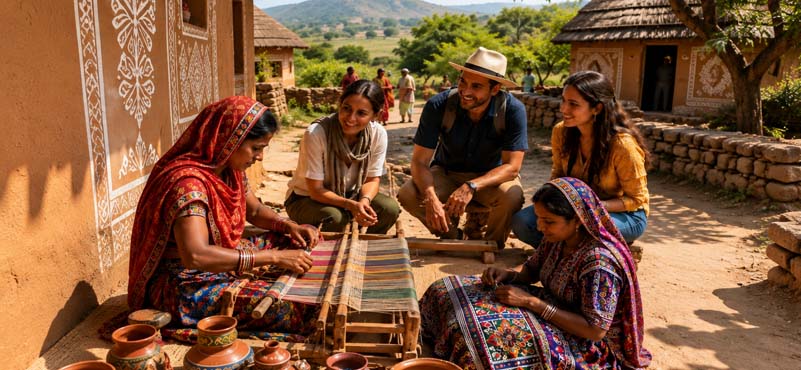
The Indian Rural Tourism Experience

Rural Tourism as a Sustainable Development Driver
Rural tourism should not be understood merely as another tourism product, or as an excursion into picturesque village life. Properly conceived, it is an alternative model of development: one that converts India’s cultural, craft and natural wealth into sustainable livelihoods while allowing rural communities to retain ownership of their identity, environment and future. Tourism becomes the means, but inclusive rural growth is the larger purpose.
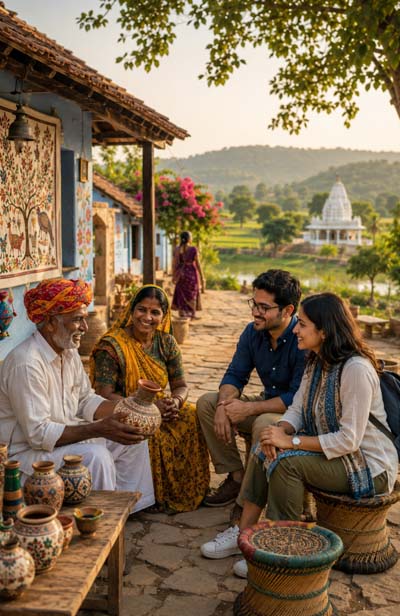
The case for this is compelling because India remains fundamentally rural, with a preponderant share of its people connected to some 6.64 lakh villages. These villages hold an extraordinary range of living traditions—art, craft, architecture, food, festivals, oral heritage, agricultural practices and relationships with the natural environment. Their value does not lie in recreating the past for visitors. It lies in enabling visitors to come “face to front” with vernacular traditions that remain alive in the present. Rural tourism, therefore, must offer an authentic encounter rather than a staged spectacle.
 The earlier Ministry of Tourism–UNDP Rural Tourism Project provides an important precedent. Initiated in support of the National Tourism Policy of 2002, its objective was to create tourism models running parallel to conventional tourism, specifically to generate sustainable livelihood opportunities among low-income rural communities. Beginning with a budget of US$5.8 million and covering 36 sites across 20 states, the programme demonstrated that rural tourism could be taken beyond small, isolated experiments. Sites could be prepared professionally, linked with markets and presented as high-quality Indian experiences. The project’s recognition through a PATA Gold Award reinforced the credibility of this approach.
The market strategy is important. Rural tourism should not chase high visitor numbers that overwhelm fragile communities and environments. Its natural constituency is the low-volume, high-yield visitor: someone willing to spend quality time in a village setting, engage with its people, appreciate its heritage and pay fairly for a distinctive experience. Visitor numbers must remain compatible with local carrying capacity, community acceptance and environmental limits. The measure of success is not footfall alone, but a larger tourism yield, visitor satisfaction, conservation and the share of benefit that reaches local people.
For that reason, community participation cannot be cosmetic. Local people must help decide what is developed, how it is presented and how benefits are shared. Women and the rural poor are the primary beneficiaries, often organised through Self Help Groups. Artisans, MSMEs and trained employable youth form the local supply and value chains. Tourism can create income from weaving, embroidery, pottery, metalwork, woodwork, leather, food, performance, guiding, transport, accommodation and interpretation. Culture becomes an income route—but only when the community remains an active participant rather than a passive object of tourism.
The model depends upon two complementary work plans: “software” and “hardware.” The software is the human and institutional capacity that makes tourism sustainable. It begins with a baseline survey and an understanding of the community’s felt needs. It includes awareness of tourism as a livelihood opportunity, gender sensitisation, design inputs that contemporise art and craft without erasing their character, hospitality and visitor-handling skills, institution building, and engagement with the travel trade and media. It also includes participatory experiences—akin to the gurukul process—through which visitors do not merely buy a craft but understand, observe or learn its making.
The hardware is the supporting infrastructure: waste and sewerage management, sustainable energy, village landscaping, internal roads, lighting, wayside amenities, signage, reception and interpretation centres, refurbishment of monuments and appropriate tourist accommodation. Yet this infrastructure must not impose a standard urban aesthetic upon the village. The vernacular idiom must remain central: local materials, local skills, traditional styles and sensitivity to the surrounding environment. Infrastructure should strengthen the sense of place, not destroy the very distinctiveness that attracts the visitor.
Equally important is an institutional mechanism that allows the model to survive beyond a project period. District- and village-level bodies must bring together government, implementing partners and community stakeholders. The Village Tourism Development Committee is especially important as the local institution that can own, operate and market the tourism product. Convergence with other government schemes can provide resources, while professional marketing and connections with existing tourism circuits can create demand. Rural tourism succeeds only when site readiness and market readiness advance together.
This also requires a stronger enabling environment, supported by updated databases, sector analysis and clear benchmarks for strategy, policy and plans. New tools, including AI, can help identify visitor segments and shape a targeted experience, but technology is useful only when it serves local priorities. Climate sensitivity and market linkage must be built into the model from the beginning. The real task is to connect rural producers with leisure, pilgrimage, visiting-friends-and-relatives and business travel flows without allowing market demand to displace community needs or weaken the environmental base on which the experience depends.
The examples illustrate the range of possibility. In Hodka in Kachchh, embroidery, mud work, weaving, leatherware, pottery, silverware, traditional dwellings and camel-based experiences can connect the local community with the wider attraction of the Rann and Dholavira. In Anegundi, rural life sits alongside the Tungabhadra, Kishkindha, the Vijayanagar legacy and Hampi. Aranmula’s traditional oarsmen and metal mirror, Pochampally’s ikat weaving, Sualkuchi’s Bihu traditions and Naggar’s vernacular setting show that no single template is required. Each destination must grow from its own assets, people and carrying capacity.
Ultimately, rural tourism is sustainable tourism for inclusive growth. It can help visitors interact with communities, appreciate art and craft, explore heritage diversity and bond with India’s heartland. At the same time, it can empower local initiative, enhance livelihoods, support conservation and give women a stronger role in decisions and benefit sharing. The decisive shift is from taking tourists into villages to building tourism with villages. If India combines community capacity, sensitive infrastructure, credible institutions and intelligent market linkage, rural tourism can become a genuine driver of sustainable development—and a meaningful component of the Viksit Bharat horizon.
ABOUT THE AUTHOR
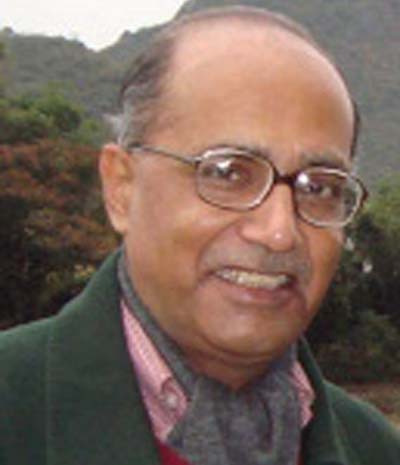
Sudhir Sahi is a Delhi-based UN Tourism and environment specialist. Formerly with Air India, he has been associated with Indian Mountaineering Foundation, authored research papers on environment and tourism.