
Over 50 years of Tourism Advocacy
Building India's Travel Businesses
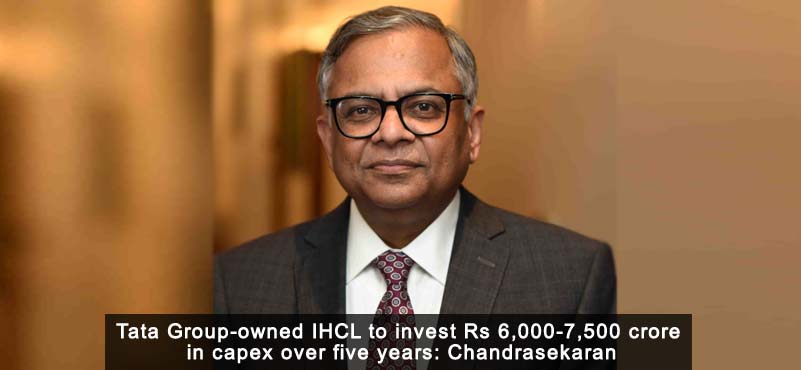
IHCL Keeps the Industry Flag Flying; to invest up to Rs 7,500 crore over next five years.

FY 2026 has been another strong year for IHCL with the company posting consolidated revenue of ₹9971 crore and net profit of ₹2247 crore. In FY 2026 the company generated free cash of ₹1450 crore and increased total cash balance to ₹4,300 crore.
The investment plan comes as IHCL pushes ahead with its Accelerate 2030 roadmap, which targets consolidated revenue of Rs 15,000 crore and an expansion of its portfolio to over 700 hotels from around 630 currently. Of these, 375 hotels are operational. The company has also expanded through acquisitions over the past year, including ANK Hotels, Pride Hospitality and Brij Hotels.
Responding to shareholder queries at the company’s annual general meeting, non-executive chairman, Chandrasekaran, said IHCL generates annual free cash flows of around Rs 1,200 crore, enabling it to sustain capital expenditure of Rs 1,000-2,000 crore every year.
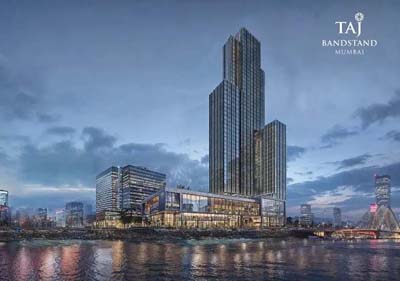
A significant part of the investment pipeline includes the upcoming Taj Bandstand hotel in Mumbai, the group’s flagship luxury project being developed near Bandra Fort. Spread across two acres, the 50-storey, 500-room property will involve an investment of around Rs 2,000 crore.
How IHCL performed in Q4FY26
Consolidated revenue for the quarter came in at Rs 2,765 crore, up 14% year-on-year. EBITDA grew at a similar pace to Rs973 crore, with margins at 35.2%. Adjusted PAT stood at Rs 600 crore, up nearly 15%.
Growth was running at 15% year-on-year in January and February before moderating to 11% in March, when the impact of West Asia-related cancellations began showing up. At an enterprise level, IHCL’s management indicated the revenue impact was closer to Rs 1,000 crore.
Standalone revenue grew 12% to Rs 1,660 crore, while EBITDA and PAT, excluding exceptional items, rose 17% and 24% respectively. Domestic same-store RevPAR was up 11.6% year-on-year, driven by a 15% jump in room revenue.
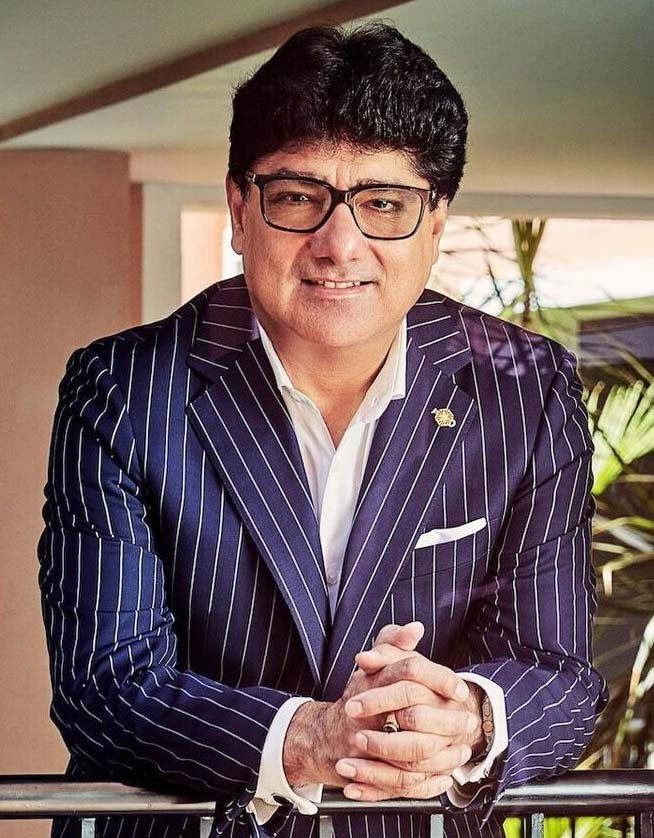
MD and CEO Puneet Chhatwal Leads the Charge from the Front!
 The year 2030 is still a way off and IHCL could well start looking at 1000 properties, given their present rate of adding hotels to its portfolio, against a stated target of 700 hotels. In the last six years, the company has grown on the back of an asset light strategy as an additional source of adding rooms; adding brands to its flagship verticals including The Taj, Vivanta and Ginger; acquisitions that gave an added dimension to its portfolio, like Brij Hotels. In the process, the playbook has been taken from global brands like Marriott and Accor. The road to growth is building confidence among investors, letting them put in the money, and then running their properties for them.
Leading this charge has been the company’s MD and CEO, Puneet Chhatwal, who has had an enviable earlier track record of development in hospitality, with international chains including Radisson. Chhatwal breathed new energy in an otherwise somewhat quieter company, that saw comparatively uneventful tenures from its earlier CEOs. Post Covid thirst for travel helped, so has the desire of Indians to travel more, spend more – all this gave Indian hospitality its current impetus that looks poised for growth for some time. Demand is chasing supply, giving hospitality a clear edge as an investment category for all – investors whether at equity level, or on the stock markets in individual capacity. In this maze, IHCL has stood out, with Chhatwal holding the baton for the company and indeed also the industry.
Admittedly, the impressive rise in EBITA is across the major chains; given the mix of properties at IHCL, while continuing this heady growth, the task has been that much more formidable. – Editor
Domestic demand remains the key support, says the report.
- Domestic demand remained resilient through the quarter and into April, even as international markets stayed subdued. Leisure travel held up, business travel showed gradual recovery across urban markets, and Goa reported around 25% growth in March-April.
- Mumbai properties continued to operate at over 90% occupancy. The foreign guest mix stayed broadly stable at around 30% for standalone operations through FY26, with IHCL’s management stating there was no material change during the year.
- TajSATS, the company’s air catering joint venture, delivered 13% growth with an EBITDA margin of 22.8%. Management fees for the full year crossed Rs 685 crore, up 22% year-on-year, reflecting both like-for-like growth and new hotel openings.
- IHCL’s newer verticals, which include Ginger, Qmin, ama Stays & Trails and Tree of Life, reported 25% revenue growth in FY26, with combined revenue at Rs 753 crore.
- Ginger’s consolidated revenue crossed Rs 709 crore for the year. The Ginger Mumbai Airport property alone crossed Rs 100 crore in revenue while delivering a 56% EBITDA margin.
- Qmin expanded to over 100 outlets with gross merchandise value nearing Rs 200 crore.
- Newer brands now contribute around 10% of enterprise revenues, with expectations of a higher share as scale improves.
Current Portfolio
IHCL’s current operational portfolio stands at 375 hotels with over 33,000 keys, with a pipeline of 254 hotels adding another 31,300 keys, largely under asset-light or managed formats.
For FY27, IHCL’s management has guided for 12-14% revenue growth, supported by 60-plus hotel openings and room additions across Taj Ganges, Vivanta Ekta Nagar and Ginger Ekta Nagar, among others, as per the report.
For FY26, IHCL reported operating revenue of Rs 9,689 crore, with the Taj brand contributing 69% of the total, underlining the growing importance of the luxury hospitality segment in its business mix.
Chandrasekaran said the company would continue to adopt a calibrated approach to overseas expansion, adding that the Taj hotel in Frankfurt is expected to open later this year. While management contracts would remain an important growth driver because of their asset-light nature, IHCL would continue to maintain a balance with owned properties to ensure service standards and brand quality.
IHCL clocked an operating revenue of ₹9,689 crore with 69 per cent coming from Taj brand of hotels that caters to the luxury segment.
He said that the company will maintain a balance between owned and management contracts. Although the latter is a faster way to grow, it comes with the challenge of ensuring quality is maintained, he added.
Outlook for tourism
On the demand outlook, Chandrasekaran said domestic tourism continued to remain robust even as foreign tourist arrivals had moderated amid global uncertainties. He attributed the resilience of the hospitality sector to rising disposable incomes, improving air and road connectivity, sustained infrastructure investments and increasing travel aspirations among consumers.
“The hospitality sector in India is benefiting from a number of structural drivers and advantages,” he said, adding that India continues to remain one of the fastest-growing major economies despite geopolitical tensions, evolving trade dynamics and technology-led disruptions affecting the global economy.
“The economy continues to navigate a period of uncertainty due to geopolitical tensions, evolving trade dynamics, technology disruption, and shifting consumption patterns. Despite all these challenges, the economic activity globally has been quite resilient,” he said, pointing to the International Monetary Fund’s projection of 2026 global growth at 3.1 per cent and outlook for 2027 at 3.2 per cent.
Investments at IHCL
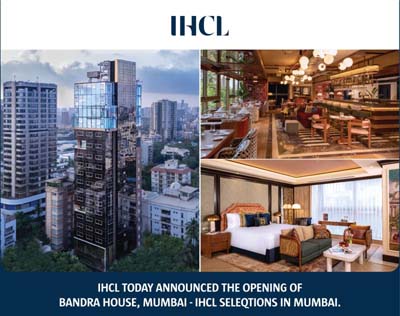
Further investments will be made in digital applications, cybersecurity as well human resources to maintain quality standards and enable the company to benefit from AI tools, he said. There is no plan to raise fresh equity or debt and the company will use internal accruals for growth.
Chandrasekaran said IHCL has diversified significantly in the last 5-10 years and has created multiple platforms to address different market segments. In FY 2026 it signed 250 properties increasing its portfolio to 630 and opened 132 new hotels.
Chandrasekaran said the company will continue to expand across segments and open new hotels in North East, Punjab and Himachal Pradesh.
“The scope for expansion is very high. Why can’t we have a Ginger hotel at every district headquarters? Today we have 250 Ginger hotels and we can target 1,000 hotels over a period,” he said responding to shareholder questions.